S
SRK
Vieras
Aiemmin foorumilla oli esillä tuo paisuntaelintyypin vaikutus suorituskykyyn eri parametreilla:
http://ecaaser3.ecaa.ntu.edu.tw/weifang/hp/The%20effects%20of%20improper%20refrigerant%20charge%20on%20the%20performance%20of%20a%20heat%20pump%20with%20an%20electronic%20expansion%20valve%20and%20capillary%20tube.pdf
Pisti silmään oheinen texti maailmalta labraolosuhteissa R22 -pumpulle , jonka suorituskykyä oli tutkailtu eri kanteilta
otsikon mukaisesti Yhdysvaltain länsiosissa ... jopa eri ilmastovyöhykkeillä.
http://www.aceee.org/files/proceedings/2008/data/papers/1_734.pdf
Täkäläisittäin kiinnostanee erityisesti tuo vajaa- ja ylitäytön täytön vaikutus lämmitysmoodissa COPiin ja kapasiteettiin!
Capacity
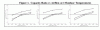
Fig. 1 shows the capacity ratio versus airflow with points labeled by charge level; each
line represents a common charge. The capacity increases about 7% from the lowest flow to the
highest at each charge level. A charge level of 75% reduces capacity by 1 to 2% and a charge
level of 125% increases capacity by about 7%.
Coefficient of Performance
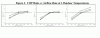
Fig. 2 shows the normalized COP at each temperature versus airflow. The individual
curves represent charge levels with the points labeled by charge level. There is an increase in
COP of about 10% from the lowest airflow to the highest at each charge level and temperature.
The COP is 1 to 2% higher at 75% charge and about 1% lower at 125% charge. The largest
effects of charge on COP occur at 47 F where the corresponding reduction in capacity noted
above occurs.
Effect of Charge and Airflow on HSPF
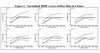
Fig. 5 shows the effect of airflow and charge on HSPF for each of the six climate zones.
Reducing the airflow from the nominal value by 25% results in a loss in HSPF of about 7%, and
increasing the airflow 25% has a relatively small effect except at low charge.
Surprisingly, reducing the charge to 75% produces an increase in HSPF
of about 5% in the warmer climates
and 2 or 3% colder climates. The HSPF values at 100% and 125% charge are very close in the
warmer climates. In the colder climates 125% charge results in a loss of about 5% in HSPF.
Onko foorumilla jokin perstuntuma näiden r410-laitteiden suhteen erityisesti vajaatäyttötapauksissa, joihin monasti kaiketi törmätään muutenkin ajan kanssa sopivilla vuosivuototasoilla ilman sen kummenpaa tarkoitushakuisuutta.
Peruskysymys kai on ,kumpaa tavoittelet enemmän:
Hyvää kapasiteettia kylmässä (kW) vai hyvää COPia kylmässä?
Aiheesta voinevat hehkuttaa vapaasti ... jopa ammattilaiset!