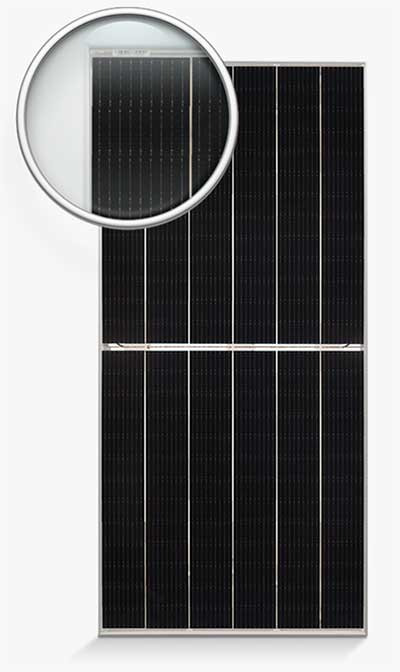
PV paneelien tekniikat (PERC, TOPCon, HJT ja IBC jne)

  • Viestiketjun aloittaja Viestiketjun aloittaja Espejot
  • Aloituspäivämäärä Aloituspäivämäärä

Espejot

Hyperaktiivi
There are four main pathways for silicon cell technology beyond PERC: n-PERT (passivated emitter rear totally diffused), n-TOPCon (tunnel oxide passivated contact), heterojunction (HJT) and interdigitated back contact (IBC). None of these are new and all of them are being evaluated and optimized by R&D teams, institutions and business units the world over as candidates for the next mainstream solar cell technology. What unites them is that all are based on n-type silicon, rather than p-type.


TOPCon
1) LG NeON R
2) Jinko Tiger Neo
- Hinta Saksassa 110 EUR alv0 *
3) Trina Solar Vertex S+
- Hinta Saksassa n. 100EUR alv0 *
4) Q Cell Q.Tron G1+
5) Ralos RLS-630
6) Canadian Solar
- TOPHiku 6 n. 120Eur alv0 *
- TOPHiKu 7

HJT
1) Canadian Solar HiHero
2) Meyer Burger
- hinta Saksassa n. 199 EUR/alv0 *
3 Panasonic EverVolt
4) REC Pure Alpha
- Hinta Saksassa 280 EUR alv0 *
5) REC Pure Alpha-R
- Hinta Saksassa 169EUR alv0 *

IBC, ABC, HPBC
1) SunPower Maxeon
2) Longi Hi-Mo 6
- Hinta Suomessa 83-140EUR **
3) Aiko Solar Neostar 2S/2S+
- Hinta Saksassa 120-160EUR alv0 **
- Vuonna 2024 myynissä kolmannen sukupolven paneelit

Shingled​

- Hyundai HiE-S400HG (p-type)


Hinnat ilman rahtia
* 03.2024 ** 06.2024
 
Viimeksi muokattu:

The benefits of IBC solar cells​


Reduced losses by shading
IBC solar cell restructuration places frontal metal contact on the rear side of the cell, eliminating shade caused by the busbars. By doing this, IBC solar cell increases the photon effective absorption which results in reduced power losses and several other benefits.

Reduced series resistance
IBC solar cells lower the series resistance at the cell from traditional Al-BSF cells, by being able to place larger metal contacts at the rear side of the cell, becoming a key factor for CPV applications.

Increased power output per square meter
With an increased efficiency for IBC solar cells, an IBC solar panel can be manufactured without space between cells, further increasing the power output per square meter for a single module. This makes IBC solar cell technology more compelling for applications with limited space.

Independent optical/electrical optimizations
Since IBC solar cells relocate metal contacts at the back, the optical and electrical optimizations for the cell are decoupled, making each optimization completely independent from the other, making it easier for researchers to improve one or the other separately.

 
SmartWire Connection Technology (SWCT®)
is a revolutionary cell connection process for solar module manufacturing. Standard busbars are replaced by 18 micro-wires that gather energy more fluently and strengthen the cells. SWCT®’s superior performance results in advanced module efficiency while negative effects are significantly reduced.


Super Multible Bus Bar technology

· Less shadowing in the cell because there are thinner “power lines”.
· Shorter transport paths of the electrons because more lines are available.
· Less transport resistance because shorter paths are created.
· Less ohmic losses such as heat because the cell heats up less.

 
Jinko ja Trina Solar on joutunut taipumaan patenttikiistassa. Kummalikin on valikoimassa TOPCon paneleeita (Tiger Neo ja Trina Solar Vertex S+)


Tässä Q.cell vastaava TOPCon paneeli
 
Viimeksi muokattu:
Longi ui vastavirtaan yhdistämällä IBC teknologian p-tyypin kennoon.

HPBC, Hybrid Passivated Back Contact Cell Technology

This time, Longi chose to use IBC technology on P-type silicon chips, which is the first in the industry. HPBC technology can achieve a cell efficiency of 25%. The power of the 72-type bifacial module is 575W, and the corresponding module efficiency is 22.3%. Compared with the mainstream PERC module, the power is 25W higher and the efficiency is 1% higher.Thanks to HPBC’s advanced cell technology and the new connection technology, the module can achieve lower linear attenuation. The attenuation and linear attenuation in the first year are reduced to 1.5% and 0.4%/year respectively, which is a big improvement compared to mainstream PERC modules.With the high conversion efficiency and open circuit voltage of the module, the power temperature coefficient of the HPBC module is better, which will further improve the power generation of the module.

Due to lower attenuation and better temperature coefficient, the comprehensive power generation capacity of LONGi HPBC modules is about 3% higher than that of mainstream PERC modules. In addition, the design of no metal grid lines on the front of the HPBC cell makes the HPBC modules have a higher appearance, especially in the scenarios where customers have higher requirements on the appearance of distributed power plants such as households, which can better meet the needs of customers.


Viimeksi muokattu:

Shingled Solar Panels​

In general, conventional modules can contain 32, 36, 48, 60, 72, and 96 cells. The cells are placed in a rectangular or square shape with spaces between them. Then, by means of high soldering processes, these spaces are filled by copper busbars or ribbons which provide interconnection between the solar cells. Moreover, traditional cells are commonly connected in series.

On the other side, shingled modules avoid the use of ribbons, busbars, and soldering processes.

Instead, they achieve the interconnection of their cells by cutting them (using laser technologies) into 3 to 6 strips that are subsequently assembled in strings by connecting the front edge of each strip to the rear edge of the adjacent one. In that connection, a suitable electrically conductive adhesive is placed, resulting in no gaps between the strips.

Therefore, this process creates a continuous string of strips, which can be combined with other ones by using ribbons and busbars to obtain shingled modules. Additionally, an important difference is that in this case cell strings are connected in parallel.

What are the advantages of shingled solar panels?​


Higher Power Density
Shingled solar panels can produce higher power per square meter than conventional panels since they no longer require several meters of ribbon across the module, allowing a full effective area of utilization. This means there are more solar cells exposed to sunlight and producing more energy.

Consequently, as shingled panels are not spaced apart using multiple busbars (MBB) or soldered ribbons like in conventional ones, their modules can achieve a higher power density in less space. Furthermore, it is expected that shingled solar cells would keep increasing their power performance in the next years.


Lower Energy Loss
Conventional solar panels commonly have their individual cells wired in series, so when a particular portion of the modules is shaded, a bypass diode will be activated turning off that side of production and leaving only the remaining cells of the module, resulting in power loss.

In contrast, since shingled solar cells are wired in parallel, a lower amount of cells will be affected by the shading effect in a section of the module. This translates into substantially reducing energy losses. Moreover, using shingled panels greatly reduces the ohmic losses as the current is lower (which also improves temperature performance) than traditional ribbon-connected strings because of the smaller area of the “shingles”.


Development of IBC technology

As solar energy technology continues to advance, Interdigitated Back Contact (IBC) solar cell technology has emerged as a prominent player in the photovoltaic industry. IBC technology maximizes light absorption efficiency by minimizing metal shading on the surface of solar cells.

Heterojunction with Partially Back Contact (HPBC)

By incorporating partial contact on the back of solar cells, HPBC effectively reduces the resistance loss of the cells, enhancing the overall photoelectric conversion efficiency. Leading solar companies such as SunPower and Panasonic have successfully adopted HPBC technology.

Totally Back Contact (TBC)

TBC technology is an evolved form of IBC with total back contact. By completely eliminating metal lines on the front side of solar cells, this technology maximizes light absorption. The design of total back contact reduces impedance, enhancing the overall performance of solar cells.

Passivated Back Contact (PBC)

PBC technology focuses on passivating the surface on the back of solar cells to reduce surface defects and improve charge transfer efficiency. The advantage of this technology lies in lowering the surface recombination rate of solar cells, thereby improving long-term performance. Several solar manufacturers, including LG and REC, have adopted PBC technology in their high-efficiency solar cell products.

Homojunction Back Contact (HBC)

HBC technology employs a homojunction structure, designing the back of solar cells with the same material to reduce the complexity of heterojunction structures. This simplified design aids in improving production efficiency and lowering manufacturing costs.

Advanced Back Contact (ABC)

ABC technology represents an overall upgrade of IBC technology, combining various advanced technologies. ABC technology aims to further enhance the efficiency of solar cells and expand their applicability under complex light conditions. Several technology companies and research institutions are actively advancing the research and development of ABC technology.

ref: www.linkedin.com/pulse/ibc-solar-cells-technology-analysis-hpbc-tbc-pbc-hbc-abc-zqnyc
 

The rise of back contact cell architecture​

Sometimes, progress involves looking backwards. In this case, a return to back contact solar cell architecture has resulted in improved efficiencies and reductions in cost. High efficiency led the move from traditional back surface field (BSF) cell technology to PERC and other cell types, while TOPCon is currently the technology of choice in the mainstream. However, back contact cell architecture has consistently proven its worth in terms of efficiency.

The underlying principle of back contact technology is the placement of the positive and negative contacts on the backside of the cell, which provides numerous benefits. With both contacts at the rear, the front surface remains unobstructed, maximizing both the cell's exposure to sunlight and its light absorption. This structure minimizes the surface area where recombination can occur, leading to improved electron flow and increased efficiency. Variants of this technology include Emitter Wrap-Through (EWT), Metal Wrap-Through (MWT) ─ where only the busbar is placed at the rear ─ and Interdigitated Back Contact cells (IBC).

Of the above, IBC is the most promising. In 2022, the most efficient commercial IBC solar module first achieved the 23% efficiency level, and a back-contact based solar module made in China recently even reached the 24% level. In both cases, the module was manufactured by AIKO.

t is noteworthy that the IBC structure can be adapted to either p-type or n-type wafers and can even be implemented onto different cell architectures, such as TOPCon or HJT. However, the best commercial cell efficiencies so far have been attained by combining the back contact layout with the n-type TOPCon architecture – the approach AIKO has chosen to follow. In its recent World Energy Investment 2023 report, the International Energy Agency (IEA) states that n-type cells will lead the market by 2033. AIKO calls its current technology ABC, which stands for ”all back contact,” and has attained mass production efficiency of 26.5% for its cells.

The key to mastering IBC technology is interdigitated doping of the solar cell. AIKO developed a procedure to isolate and fabricate the interdigitated carrier-selective collector regions to maximize high minority carrier lifetime, and it mastered the rear surface passivation, handling the presence of the opposite polarities of dopants on the backside of the solar cell. The approach safeguards efficiency while also simplifying an otherwise complex and costly process. Another significant cost reduction step taken by AIKO is to employ copper for the cell’s metallization, instead of the more expensive silver common to most other cell technologies.

The back contact structure also presents a unique interconnection opportunity. Since the contacts of both polarities lie on the same side, the ribbons don’t have to be connected from the back of one cell to the front of the next; they can run straight, which avoids bending and allows the cells to be densely packed, improving the utilization rate of the module area.


Viimeksi muokattu:
Takaisin
Ylös Bottom