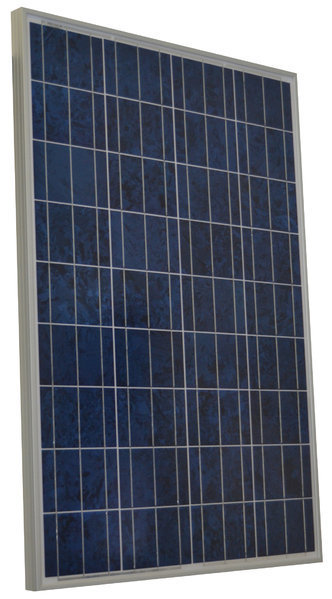
According to this theory, about 37% of sunlight is converted to heat, 18% passes through the cell, 4% gets lost by Carnot and emission losses, 11% gets lost by Bultzman loss and finally, 30% will be converted to electricity. It should be noted that these results are approximate. Based on the laws of thermodynamics, the number 30 is indeed the maximum achievable efficiency for a single junction c-Si solar cell under one sun illumination.
The dominant amount of intrinsic loss contributes to heat generation in a solar cell’s structure. Heat generation corresponds to the transmission of two types of photon groups into the cell. One of them is the photons with energy levels lower than the bandgap which lacks the energy required to excite electrons and whose energy is transferred to phonons in a structure. This process comprises about 18% of the c-Si solar cell’s loss. The other type includes photons with energy levels higher than the bandgap. High energy photons create free carriers known as hot carriers in a solar cell. These photons have excess energy compared to the bandgap; thus, they cause carriers to excite to levels above the band edge resulting in hot carriers. Hot carriers release their energy over bandgap to cool down to band edge to get extracted and participate in energy conversion. The extra energy is then transferred to phonons and contributes to the process of heat generation in a device leading to a temperature rise and causing an inevitable impact on the performance of the solar cell. This respective loss possesses about 37% of the c-Si solar cell’s energy conversion [35].
As mentioned above, carriers generated in a conventional solar cell, lose energy by cooling down from their prior situation to the band edge by optical phonon emission. These energetic carriers can contribute to a higher conversion efficiency if there is a way to prevent them from cooling down and extract them at their elevated energy eliminating thermalization loss. In this paper, a model is proposed to tackle the hot carrier loss developed from energetic photons to achieve higher conversion efficiency in a conventional solar cell.


 Tässä sen loppuosa