MSZ-LN sulatushuijaus

iro

Vakionaama
Tämä olisi kyllä mielestäni tarpeen kovalla pakkasella. Kiitos, jos voit lisätä tällaisen koodiin. En osaa sanoa, mikä on turvallinen raja voitelun kannalta, mutta en ainakaan uskalla käyttää kuuden tunnin säälisulatusta -30°C pakkasessa.
@tjs76 ja kaikki muut joita pitkä säälisulatusaika kovalla pakkasella huolettaa.

Ohessa päivitetty "mitusrunner.yaml" jossa säälisulatusaika säätyy ulkolämpötilan mukaisesti. Melko kevyesti testattu, joten kun/jos otat tämän käyttöön seuraa Mitsurunnerin toimintaa muutaman päivän.

Saat ominaisuuden käyttöön korvaamalla nykyisen "mitsurunner.yaml" tiedoston zip-paketissa olevalla "mitsurunner_x.yaml" tiedostolla. Päivitä tarvittaessa "costants-yaml" tiedostossa MAX_HEATING_TIME arvo.
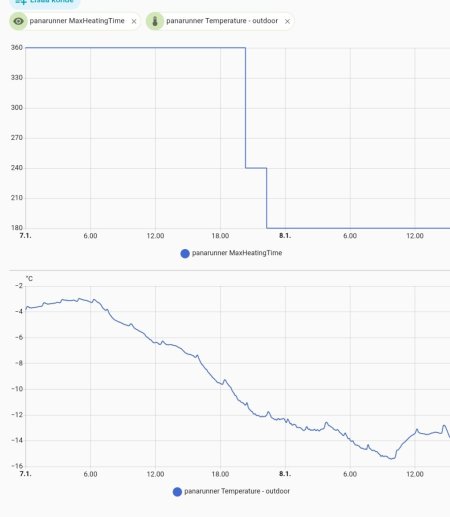
Seurannan helpottamiseksi säälisulatusaika näkyy WEB-näkymässä arvona "MaxHeatingTime".
Bootin jälkeen säälisulatusaika on MAX_HEATING_TIME, päivittyy ulkolämpötilaa vastaavaksi seuraavan sulatustapahtuman jälkeen.

Default lämpötilarajat ja vastaavat korjauskertoimet ovat (voit muuttaa noita tarvittaessa) :
* ulkolämpötila > -10 C ==> kerroin 3.0 ==> 6h jos MAX_HEATING_TIME = 120
* ulkolämpötila välillä -10 C ja -20 C ==> kerroin 2.0 ==> 4h jos MAX_HEATING_TIME = 120
* ulkolämpötila < -20 C == kerroin 1.5 ==> 3h jos MAX_HEATING_TIME = 120.

Koodi:
# Script for forced defrosting
# Forced defrosting prevents oil to accumulate to some places in device,
# which may cause compressor not to get oiled when running.
  - id: schedule_forced_defrosting
    mode: restart #timer will be restarted from the beginning allways when called --> starts always again          
    then:
    - lambda: !lambda |-
        //* adjust maximum heating time value according to the outdoor temperature
        if (isnan(id(outdoor_temp).state)) id(out_t_coefficient) = 1.0;
        else if (id(outdoor_temp).state > -10.0) id(out_t_coefficient) = 3;
        else if (id(outdoor_temp).state < -20.0) id(out_t_coefficient) = 1.5;
        else id(out_t_coefficient) = 2;

        id(G_max_heating_time_passed) = false;

    - delay: !lambda "return MAX_HEATING_TIME * 60000 * id(out_t_coefficient);"
    - lambda: !lambda |-
        id(G_max_heating_time_passed) = true;
 

Liitteet

  • mitsurunner_x.zip
    4,9 KB · Katsottu: 24
Viimeksi muokattu:

iro

Vakionaama
Tässä on nyt LN-25 pöhissyt Mitsurunnerin kanssa pari viikkoa. Talo on vuodelta -75 , 117 neliötä ja eristykset seinissä aika väsyneet. Katolla on puhallusvillaa lisätty reilusti.

Pumppu hoitaa pääosan lämmityksestä, kylpyhuoneessa on lattialämmitys erikseen. Siirsin lisäksi sisäyksikön lämpötila-anturin parin metrin päähän sivusuunnassa koneesta ja noin metrin korkeuteen.

Viikko sitten pikkupakkasilla täällä meinasi olla jopa kuuma kun hain sopivia säätöjä koneeseen. Myös pumpun takana olevat kaksi makuuhuonetta lämpesivät ihan eri tavalla, kuin aiemmin. Pidin suuntausta kattoa pitkin suoraan eteenpäin ja täydellä puhalluksella.

Nyt kun pakkasta on parin kympin molemmin puolin, niin huomaa, että pumppu ei enää riitä pitämään koko asuntoa lämpöisenä. Mutta edelleen se lämmintä yrittää puhaltaa. Säälisulatus on 6 tunnissa ja pelkästään jo jatkuvien sulatusäänien väheneminen on ollut mahtava juttu. Puhalluksen suuntauksen pudotin alemmas, kun tuntuu että kattoa myöten lattia meinaa jäädä kylmäksi näin kovalla pakkasella.

Mutta on tämä ihan eri laite kyllä aikaisempaan verrattuna. Suuret kiitokset puulle adapterista ja erityisesti irolle runnerin kasaamisesta ja kärsivällisestä opastamisesta käyttöönoton kanssa!
Hienoa että saatiin taas yksi LN toimimaan kunnolla.
Jos asennusvalmis Mitsurunner (aivot ja anturit) kiinnostaa niin laita YV minulle.
 

tjs76

Jäsen
@tjs76 ja kaikki muut joita pitkä säälisulatusaika kovalla pakkasella huolettaa.

Ohessa päivitetty "mitusrunner.yaml" jossa säälisulatusaika säätyy ulkolämpötilan mukaisesti. Melko kevyesti testattu, joten kun/jos otat tämän käyttöön seuraa Mitsurunnerin toimintaa muutaman päivän.

Saat ominaisuuden käyttöön korvaamalla nykyisen "mitsurunner.yaml" tiedoston zip-paketissa olevalla "mitsurunner_x.yaml" tiedostolla. Päivitä tarvittaessa "costants-yaml" tiedostossa MAX_HEATING_TIME arvo.
Seurannan helpottamiseksi säälisulatusaika näkyy WEB-näkymässä arvona "MaxHeatingTime".
Bootin jälkeen säälisulatusaika on MAX_HEATING_TIME, päivittyy ulkolämpötilaa vastaavaksi seuraavan sulatustapahtuman jälkeen.

Default lämpötilarajat ja vastaavat korjauskertoimet ovat (voit muuttaa noita tarvittaessa) :
* ulkolämpötila > -10 C ==> kerroin 3.0 ==> 6h jos MAX_HEATING_TIME = 120
* ulkolämpötila välillä -10 C ja -20 C ==> kerroin 2.0 ==> 4h jos MAX_HEATING_TIME = 120
* ulkolämpötila < -20 C == kerroin 1.5 ==> 3h jos MAX_HEATING_TIME = 120.

Koodi:
# Script for forced defrosting
# Forced defrosting prevents oil to accumulate to some places in device,
# which may cause compressor not to get oiled when running.
  - id: schedule_forced_defrosting
    mode: restart #timer will be restarted from the beginning allways when called --> starts always again         
    then:
    - lambda: !lambda |-
        //* adjust maximum heating time value according to the outdoor temperature
        if (isnan(id(outdoor_temp).state)) id(out_t_coefficient) = 1.0;
        else if (id(outdoor_temp).state > -10.0) id(out_t_coefficient) = 3;
        else if (id(outdoor_temp).state < -20.0) id(out_t_coefficient) = 1.5;
        else id(out_t_coefficient) = 2;

        id(G_max_heating_time_passed) = false;

    - delay: !lambda "return MAX_HEATING_TIME * 60000 * id(out_t_coefficient);"
    - lambda: !lambda |-
        id(G_max_heating_time_passed) = true;
Kiitos! Otan testiin.
 
  • Tykkää
Reactions: iro

Osku1619

Tulokas
Mihin kohin ulkoyksikössä pitää laittaa anturi? Ulospuhalluksen ilmaan vai kennoon johonkin kohin? Saisko kuvan kera ohjetta? FT35 pumppuna. Logiikan teen omalla automaatiolla mutta aloitetaan ensin mittauksilla. Tuolla mitsurunner sivustolla oli jäänyt tyhjäksi tuo anturien asennuspaikat -sivu
 

puu

Aktiivinen jäsen
Mihin kohin ulkoyksikössä pitää laittaa anturi? Ulospuhalluksen ilmaan vai kennoon johonkin kohin? Saisko kuvan kera ohjetta? FT35 pumppuna. Logiikan teen omalla automaatiolla mutta aloitetaan ensin mittauksilla. Tuolla mitsurunner sivustolla oli jäänyt tyhjäksi tuo anturien asennuspaikat -sivu
Ah, sen sivun tein sitä varten jos sinne laittaisi analyysiä vaihtoehtoisten asennuspaikkojen vaikutuksesta, mistä olen itse tehnyt vähän tutkimusta. En kuitenkaan ole saanut aikaiseksi kirjoitella siitä mitään, joten sivu on jäänyt tyhjäksi. Parempi olisi varmaan poistaa se hämäämästä.

Tuolta löytyy tietoa ja kuvia sopivasta asennuspaikasta:
 
After all of your discussions about the maximum heating time, I also wanted to bring it up to 6 hours. At the moment is it fckn cold in Germany and the perfect time for testing and saving energy.

So I extended the value to 360 minutes in the "constants, but Mitsubishi is still defrosting way too early, even if there is absoloutely NO ice on the unit.
Better than before, it went up from every hour to every two hours, but I never reach six hours. Because it works, I think it isn't a hardware issue of the Mitsurunner, I think it is a configuration error.
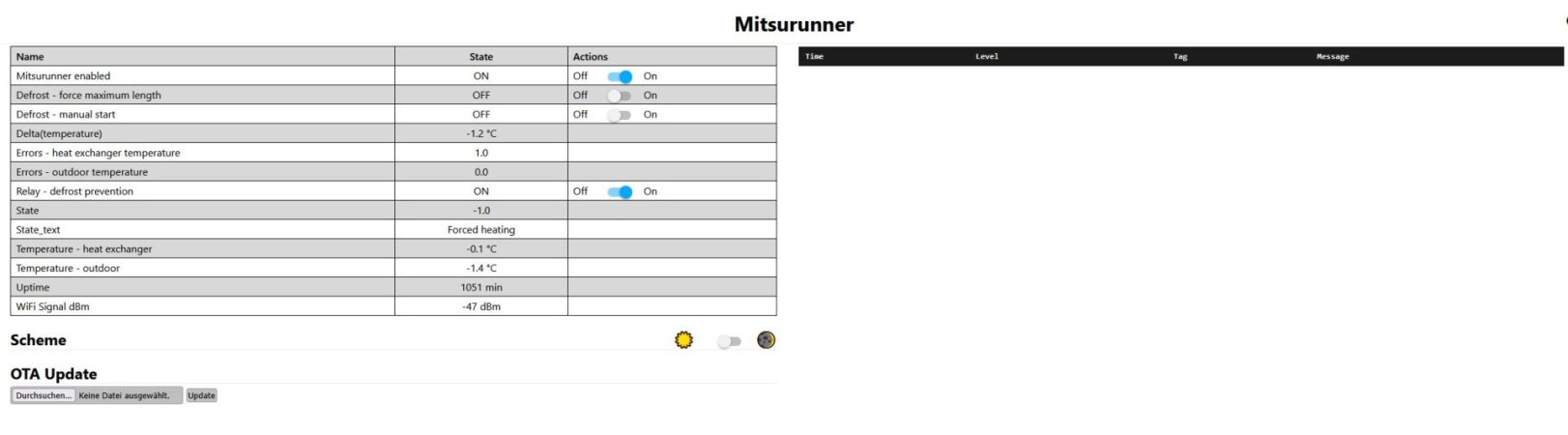
Like in this moment, Mitsurunner is still in the state of "Forced heating", but the unit defrosted.


Koodi:
#ifndef __CONSTANTS_H__
#define __CONSTANTS_H__

/* Temperature threshold that has to be exceed long enough to start defrosting. */
const float TEMPERATURE_DELTA_TO_DEFROST = 5.0;

/* Outdoor temperature thresholds to switch on/off defrost hacking */
const float OUTDOOR_TEMPERATURE_TO_ENTER_OFF_STATE = 3.0;
const float OUTDOOR_TEMPERATURE_TO_EXIT_OFF_STATE = 2.0;

/* Maximum heat exchanger temperature value to have defrost hacking on
 * This is checked on Reset, Idle and Off states only, not during defrosting */
const float HEAT_EXCHANGER_MAX_TEMPERATURE = 10.0;

/* Temperature delta value to account defrosting as started.
 * Not suggested to set this below -4.0 because it may cause the software to miss defrost events. */
const float TEMPERATURE_DELTA_DEFROSTING_STARTED = -1.0;

/* When temperature delta has been over the threshold
 * (TEMPERATURE_DELTA_TO_DEFROST) this long, defrosting is started. */
#define TEMPERATURE_DELTA_EXCESS_TIME   8   /* minutes */

/* When temperature delta has been over the threshold but delta temperature is decreasing
 * This indicates that outdoor unit might be just changing it's fan speed which has temporarily raised temperature delta
 * This timer time is waited more if temperature delta decreases back under treshold */
#define TEMPERATURE_DELTA_DECREASING_EXCESS_TIME   5   /* minutes */

/* When this time has been passed since last defrosting,
 * forced defrosting will be started. */
#define MAX_HEATING_TIME                360 /* minutes */

/* The minimum time between defrosting operations. */
#define MIN_HEATING_TIME                360  /* minutes */

/* The time that the defrost hack relays is off after defrosting is started. */
#define RELAY_OFF_TIME                  30  /* minutes */

/* If defrosting is not started during this time after switching the relay off,
   state will be set back to IDLE instead of DEFROSTING STARTED */
#define DEFROST_TIMEOUT                 10  /* minutes */

/* Delay at the reset before allowing state machine to step to next states
 * Gives time for the sensors to be read*/
#define RESET_SENSOR_DELAY                25  /* seconds */
 
/* Delay at the device bootup before starting the state machine to give time for the
 * sensors to be read, system to connect to wifi and system to connect to MQTT broker */
#define INITIALIZE_DELAY                60  /* seconds*/


/* Sanity checks */
#if MIN_HEATING_TIME < RELAY_OFF_TIME
#error "MIN_HEATING_TIME < RELAY_OFF_TIME"
#endif

#if MAX_HEATING_TIME < MIN_HEATING_TIME
#error "MAX_HEATING_TIME < MIN_HEATING_TIME"
#endif

#endif /* #define __CONSTANTS_H__ */
 

Liitteet

  • Mitsurunner.JPG
    Mitsurunner.JPG
    81,4 KB · Katsottu: 15

juu

Jäsen
"ESP8266 is now over 10 years old and no longer recommended for ESPHome projects https://esphome.io/guides/faq/ . As a result I have moved to using a Waveshare ESP32-C3-Zero board, with a more powerfull processor that does not require more power than the ESP8266."

"Compared with ESP8266, all ESP32 variants have:
  • Roughly 5x the amount of RAM. Some components such as large displays and some sensors may not work well on ESP8266.
  • Significantly more flash memory. Most ESP8266 boards have 1-2 MB, while most ESP32 variants have 4 MB or more.
  • More GPIO pins and a better set of hardware peripherals.
That said, existing ESP8266 devices work well and will continue to be supported for years to come. Recent memory optimizations have significantly improved available heap on ESP8266, making devices that were previously unreliable now stable. If your ESP8266 devices are working, there’s no need to replace them."

Joten olisi varmaan hyvä vaihtaa suositelluksi atk:ksi toi ESP32-C3 tai tavallinen ESP32.
 

iro

Vakionaama
"ESP8266 is now over 10 years old and no longer recommended for ESPHome projects https://esphome.io/guides/faq/ . As a result I have moved to using a Waveshare ESP32-C3-Zero board, with a more powerfull processor that does not require more power than the ESP8266."

"Compared with ESP8266, all ESP32 variants have:
  • Roughly 5x the amount of RAM. Some components such as large displays and some sensors may not work well on ESP8266.
  • Significantly more flash memory. Most ESP8266 boards have 1-2 MB, while most ESP32 variants have 4 MB or more.
  • More GPIO pins and a better set of hardware peripherals.
That said, existing ESP8266 devices work well and will continue to be supported for years to come. Recent memory optimizations have significantly improved available heap on ESP8266, making devices that were previously unreliable now stable. If your ESP8266 devices are working, there’s no need to replace them."

Joten olisi varmaan hyvä vaihtaa suositelluksi atk:ksi toi ESP32-C3 tai tavallinen ESP32.
Jotta uutta uutta alustaa voisi hyvällä omallatunnolla suositella Mitsurunnerin ensisijaiseksi asennusalustaksi, jonkun pitäisi tehdä tuota alustaa tukeva versio Mitsurunner Githubiin ?
 

iro

Vakionaama
After all of your discussions about the maximum heating time, I also wanted to bring it up to 6 hours. At the moment is it fckn cold in Germany and the perfect time for testing and saving energy.

So I extended the value to 360 minutes in the "constants, but Mitsubishi is still defrosting way too early, even if there is absoloutely NO ice on the unit.
Better than before, it went up from every hour to every two hours, but I never reach six hours. Because it works, I think it isn't a hardware issue of the Mitsurunner, I think it is a configuration error.
Like in this moment, Mitsurunner is still in the state of "Forced heating", but the unit defrosted.


Koodi:
#ifndef __CONSTANTS_H__
#define __CONSTANTS_H__

/* Temperature threshold that has to be exceed long enough to start defrosting. */
const float TEMPERATURE_DELTA_TO_DEFROST = 5.0;

/* Outdoor temperature thresholds to switch on/off defrost hacking */
const float OUTDOOR_TEMPERATURE_TO_ENTER_OFF_STATE = 3.0;
const float OUTDOOR_TEMPERATURE_TO_EXIT_OFF_STATE = 2.0;

/* Maximum heat exchanger temperature value to have defrost hacking on
 * This is checked on Reset, Idle and Off states only, not during defrosting */
const float HEAT_EXCHANGER_MAX_TEMPERATURE = 10.0;

/* Temperature delta value to account defrosting as started.
 * Not suggested to set this below -4.0 because it may cause the software to miss defrost events. */
const float TEMPERATURE_DELTA_DEFROSTING_STARTED = -1.0;

/* When temperature delta has been over the threshold
 * (TEMPERATURE_DELTA_TO_DEFROST) this long, defrosting is started. */
#define TEMPERATURE_DELTA_EXCESS_TIME   8   /* minutes */

/* When temperature delta has been over the threshold but delta temperature is decreasing
 * This indicates that outdoor unit might be just changing it's fan speed which has temporarily raised temperature delta
 * This timer time is waited more if temperature delta decreases back under treshold */
#define TEMPERATURE_DELTA_DECREASING_EXCESS_TIME   5   /* minutes */

/* When this time has been passed since last defrosting,
 * forced defrosting will be started. */
#define MAX_HEATING_TIME                360 /* minutes */

/* The minimum time between defrosting operations. */
#define MIN_HEATING_TIME                360  /* minutes */

/* The time that the defrost hack relays is off after defrosting is started. */
#define RELAY_OFF_TIME                  30  /* minutes */

/* If defrosting is not started during this time after switching the relay off,
   state will be set back to IDLE instead of DEFROSTING STARTED */
#define DEFROST_TIMEOUT                 10  /* minutes */

/* Delay at the reset before allowing state machine to step to next states
 * Gives time for the sensors to be read*/
#define RESET_SENSOR_DELAY                25  /* seconds */
 
/* Delay at the device bootup before starting the state machine to give time for the
 * sensors to be read, system to connect to wifi and system to connect to MQTT broker */
#define INITIALIZE_DELAY                60  /* seconds*/


/* Sanity checks */
#if MIN_HEATING_TIME < RELAY_OFF_TIME
#error "MIN_HEATING_TIME < RELAY_OFF_TIME"
#endif

#if MAX_HEATING_TIME < MIN_HEATING_TIME
#error "MAX_HEATING_TIME < MIN_HEATING_TIME"
#endif

#endif /* #define __CONSTANTS_H__ */

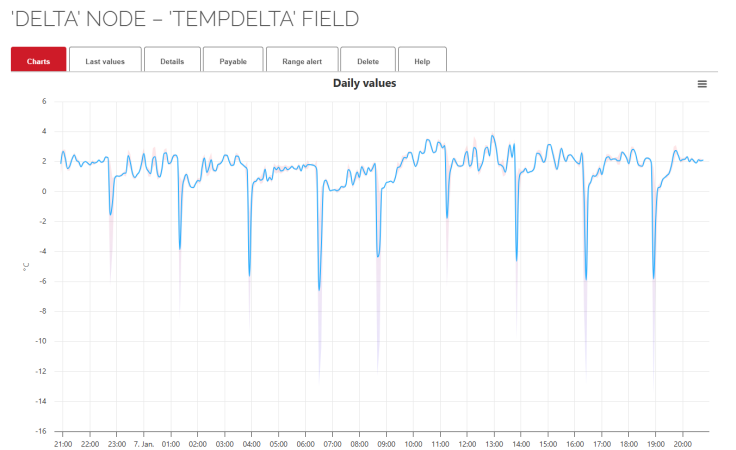
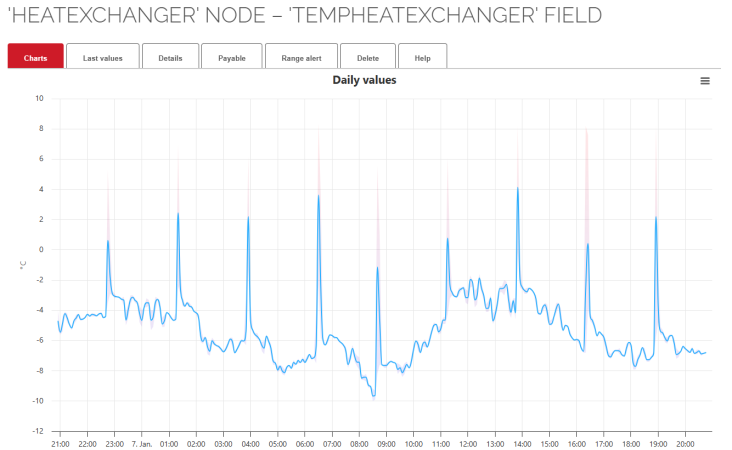
Do you have historical data (e.g. from IoT-Guru) that shows the outdoor temperature, delta_T and status?. WEB-page shows that your outside temperature is -1.4C. From a Finn's point of view it is not so cold;D
 

iro

Vakionaama
"ESP8266 is now over 10 years old and no longer recommended for ESPHome projects https://esphome.io/guides/faq/ . As a result I have moved to using a Waveshare ESP32-C3-Zero board, with a more powerfull processor that does not require more power than the ESP8266."

"Compared with ESP8266, all ESP32 variants have:
  • Roughly 5x the amount of RAM. Some components such as large displays and some sensors may not work well on ESP8266.
  • Significantly more flash memory. Most ESP8266 boards have 1-2 MB, while most ESP32 variants have 4 MB or more.
  • More GPIO pins and a better set of hardware peripherals.
That said, existing ESP8266 devices work well and will continue to be supported for years to come. Recent memory optimizations have significantly improved available heap on ESP8266, making devices that were previously unreliable now stable. If your ESP8266 devices are working, there’s no need to replace them."

Joten olisi varmaan hyvä vaihtaa suositelluksi atk:ksi toi ESP32-C3 tai tavallinen ESP32.
Äkkiä vilkaisten tuossa olisi hyvä rauta Mitsurunnerille. Syö 240V jänitettä ja sisältää releen joka sopii sulatushuijauksen ohjaamiseen.


puu

Aktiivinen jäsen
Jos ei halua harrastaa kolvaamista ja koodaamista Mitsurunnerin "aivot ja anturit" saa myös asennusvalmiina pakettina hintaan 80€. Jos @puu-adapteri on käytettävissä helpottuu myös asennus.
Lisätietoja
Erittäin hienoa että olet lähtenyt kasaamaan valmiita paketteja. Näitä nimittäin itseltänikin kysellään tämän tästä, mutta itselläni ei ole aikaa noita kasailla, joten olen vinkannut kysymään sulta. Voisit (jos haluat) laittaa myös tuonne Mitsurunner-wikisivulle "mainoksen" niin porukka löytää sieltäkin kautta mistä noita voisi tilata.
 
Viimeksi muokattu:
  • Tykkää
Reactions: iro

wannabe

Aktiivinen jäsen
After all of your discussions about the maximum heating time, I also wanted to bring it up to 6 hours. At the moment is it fckn cold in Germany and the perfect time for testing and saving energy.

So I extended the value to 360 minutes in the "constants, but Mitsubishi is still defrosting way too early, even if there is absoloutely NO ice on the unit.
Better than before, it went up from every hour to every two hours, but I never reach six hours. Because it works, I think it isn't a hardware issue of the Mitsurunner, I think it is a configuration error.
Like in this moment, Mitsurunner is still in the state of "Forced heating", but the unit defrosted.


/* When this time has been passed since last defrosting,
* forced defrosting will be started. */
#define MAX_HEATING_TIME 360 /* minutes */

/* The minimum time between defrosting operations. */
#define MIN_HEATING_TIME 360 /* minutes */

Setting that setting too high means that even though the outdoor unit is an ice cube, defrosting will not occur until the set time has elapsed. As I recall, the default value is 50 minutes and I would leave it at that. You now have both MAX_HEATING_TIME and MIN_HEATING_TIME set to the same 360 minutes. I can't say if that's the cause of your problem, maybe not. Hopefully someone more knowledgeable can help.
 
  • Tykkää
Reactions: puu
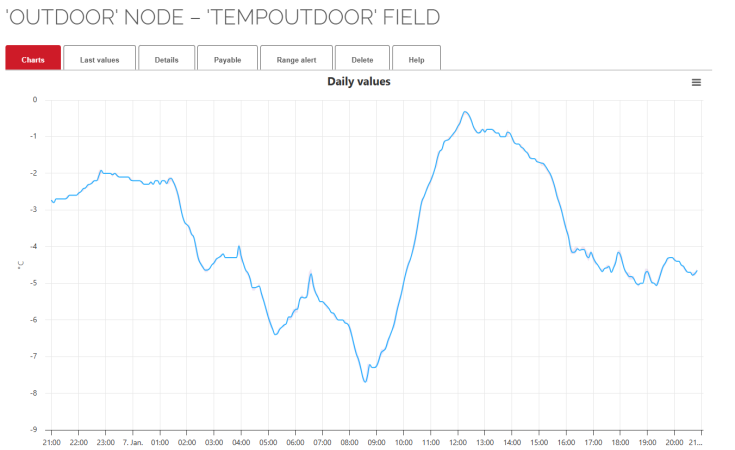
Do you have historical data (e.g. from IoT-Guru) that shows the outdoor temperature, delta_T and status?. WEB-page shows that your outside temperature is -1.4C. From a Finn's point of view it is not so cold;D
Haha yeah, I would be dying in your cold conditions... Must be crazy to have -25°C or -30°C from day to day.


@wannabe
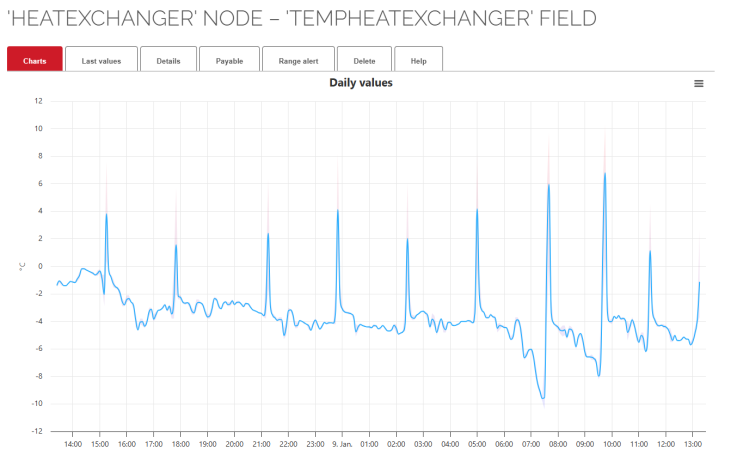
Yeah, that was my thought as well. But at the moment we have zero snowfall and always when I checked why the unit defrostet, the fins of the outdoor unit were completely clear. Not even a trace of ice. And I would like to avoid it at least in this dry, sunny, winter weather.
 

Liitteet

  • Delta.png
    Delta.png
    102 KB · Katsottu: 22
  • Heatexchanger.png
    Heatexchanger.png
    109,3 KB · Katsottu: 24
  • State.png
    State.png
    76,5 KB · Katsottu: 19
  • Tempoutdoor.png
    Tempoutdoor.png
    66,6 KB · Katsottu: 19

iro

Vakionaama
Haha yeah, I would be dying in your cold conditions... Must be crazy to have -25°C or -30°C from day to day.


@wannabe
Yeah, that was my thought as well. But at the moment we have zero snowfall and always when I checked why the unit defrostet, the fins of the outdoor unit were completely clear. Not even a trace of ice. And I would like to avoid it at least in this dry, sunny, winter weather.
As @wannabe mentioned earlier, change MIN_HEATING_TIME back to default 50 and see if that helps. If not, put your new IoT-data here.
 
As @wannabe mentioned earlier, change MIN_HEATING_TIME back to default 50 and see if that helps. If not, put your new IoT-data here.
Alright, thanks, just did so. Will check the values tomorrow again, even if it is going to be a bit snowy night. :confused: Obviously needs mored defrosting then.

Would love to seee a function on the MitsuRunner Web-Interface, to ticker the realy for a minute or so, to see if it is still working or broken / frozen / stuck. You can hear the clickering close to the switched off unit.
 

wannabe

Aktiivinen jäsen
Hmm.. tulipa noista constants-arvojen muuttamisista mieleen, että joskus mietin josko kokeilis laittaa näiden molempien arvoksi nolla TEMPERATURE_DELTA_EXCESS_TIME ja TEMPERATURE_DELTA_DECREASING_EXCESS_TIME. Jos noiden arvona on nolla, niin eikös Mitsurunner silloin anna pumpulle sulatusluvan heti, kun määritelty TEMPERATURE_DELTA_TO_DEFROST ylittyy? Vai tuleeko ongelmia? Ei ole tullu kokeiltua, kun ongelmat ja minä tullaan huonosti toimeen keskenämme.
 

iro

Vakionaama
Alright, thanks, just did so. Will check the values tomorrow again, even if it is going to be a bit snowy night. :confused: Obviously needs mored defrosting then.
Would love to seee a function on the MitsuRunner Web-Interface, to ticker the realy for a minute or so, to see if it is still working or broken / frozen / stuck. You can hear the clickering close to the switched off unit.
You can turn relay ON and OFF manually using "Relay - defrost prevention" switch of Web-interface.
 

puu

Aktiivinen jäsen
Hmm.. tulipa noista constants-arvojen muuttamisista mieleen, että joskus mietin josko kokeilis laittaa näiden molempien arvoksi nolla TEMPERATURE_DELTA_EXCESS_TIME ja TEMPERATURE_DELTA_DECREASING_EXCESS_TIME. Jos noiden arvona on nolla, niin eikös Mitsurunner silloin anna pumpulle sulatusluvan heti, kun määritelty TEMPERATURE_DELTA_TO_DEFROST ylittyy? Vai tuleeko ongelmia? Ei ole tullu kokeiltua, kun ongelmat ja minä tullaan huonosti toimeen keskenämme.
Näin sen pitäisi tehdä. Ei tuosta muuta ongelmaa seuraa, kuin että voi laukaista turhan sulatuksen esim. kun lämmitystehoa säädetään tai ulkoyksikön puhaltimen nopeus muuttuu. Lämpötila-anturien arvoja on suodatettu, joten ihan pienistä häiröistä tuo ei vielä liipaise, vaikka nuo olisivatkin nolla.

Tässä kohtaa myös kiinnostaa, mikä on motiivina laittaa nuo nollaksi?
 

tjs76

Jäsen
@tjs76 ja kaikki muut joita pitkä säälisulatusaika kovalla pakkasella huolettaa.

Ohessa päivitetty "mitusrunner.yaml" jossa säälisulatusaika säätyy ulkolämpötilan mukaisesti. Melko kevyesti testattu, joten kun/jos otat tämän käyttöön seuraa Mitsurunnerin toimintaa muutaman päivän.

Saat ominaisuuden käyttöön korvaamalla nykyisen "mitsurunner.yaml" tiedoston zip-paketissa olevalla "mitsurunner_x.yaml" tiedostolla. Päivitä tarvittaessa "costants-yaml" tiedostossa MAX_HEATING_TIME arvo.
Seurannan helpottamiseksi säälisulatusaika näkyy WEB-näkymässä arvona "MaxHeatingTime".
Bootin jälkeen säälisulatusaika on MAX_HEATING_TIME, päivittyy ulkolämpötilaa vastaavaksi seuraavan sulatustapahtuman jälkeen.

Default lämpötilarajat ja vastaavat korjauskertoimet ovat (voit muuttaa noita tarvittaessa) :
* ulkolämpötila > -10 C ==> kerroin 3.0 ==> 6h jos MAX_HEATING_TIME = 120
* ulkolämpötila välillä -10 C ja -20 C ==> kerroin 2.0 ==> 4h jos MAX_HEATING_TIME = 120
* ulkolämpötila < -20 C == kerroin 1.5 ==> 3h jos MAX_HEATING_TIME = 120.

Koodi:
# Script for forced defrosting
# Forced defrosting prevents oil to accumulate to some places in device,
# which may cause compressor not to get oiled when running.
  - id: schedule_forced_defrosting
    mode: restart #timer will be restarted from the beginning allways when called --> starts always again        
    then:
    - lambda: !lambda |-
        //* adjust maximum heating time value according to the outdoor temperature
        if (isnan(id(outdoor_temp).state)) id(out_t_coefficient) = 1.0;
        else if (id(outdoor_temp).state > -10.0) id(out_t_coefficient) = 3;
        else if (id(outdoor_temp).state < -20.0) id(out_t_coefficient) = 1.5;
        else id(out_t_coefficient) = 2;

        id(G_max_heating_time_passed) = false;

    - delay: !lambda "return MAX_HEATING_TIME * 60000 * id(out_t_coefficient);"
    - lambda: !lambda |-
        id(G_max_heating_time_passed) = true;
Hyvin toimii myös täällä. Maksimi lämmitysaika säätyy ulkolämpötilan mukaan, kuten pitää. 👍
 

wannabe

Aktiivinen jäsen
Tässä kohtaa myös kiinnostaa, mikä on motiivina laittaa nuo nollaksi?


Motiivina on välttää maximipituisia10 min (teho liki nollan – varsinainen sulatus – teho likinollaan) sulatuksia ja niiden aiheuttamaa vedontunnetta ja pienentää sulatuksien aiheuttamaa sisälämpötilan pudotusta. Jos ylläkuvatun sulatusjakson saa pidettyä esim. alle 6 min. niin puhallin on seis max. 10 min. vastoin kuin maximipituisessa 10 minsan sulatuksessa, jossa puhallin seis 14 min. Yleensä maximipituisen sulatuksen jälkeen puhallin puhkuu jonkin aikaa kylmempää ilmaa kuin sisälämpötila on. Lyhyen sulatusjakson etuna on, että jos ja usein kun SY:n kennon lämpötila jää lähelle sisälämpötilaa, niin parhaassa tapauksessa puhalluksen alkaessa puhalluslämpötila on jo sama kuin sisälämpötila. Jos on vähän alle, niin nousu lämmittävään lämpötilaan on ripeämpi, kuin jos puhalluslämpöä lähdetään nostamaan SY:n kennon miinuslämmöistä→ ei juurikaan vedontunnetta. Plus ois halu välttää tilanne, jossa STATE 3 ja STATE 2 nylkyttää eestaas edes lyhyen aikaa aiheuttaen varman pitkään jatkuvan jäätävän ilman valumisen ja puhalluksen SY:stä.

Osin mutulla mennään ja usko on vahva, mutta horjuva, että hyötysuhde pysyy parempana himpan lyhyemmillä sulatuksilla, kuin että lämmitysjakson pituuteen tiristetään viimeisetkin minuutit. Ja vaikka inan useammin toistuvat sulatukset söisivätkin hiukan hyötysuhdetta, niin ei tuota tuskaa maksaa sitä hintaa parantuneesta asumismukavuudesta. SY olkkarissa, eikä oo kivaa, kun arktista ilmaa valuu varpaille sohvapottuna istuskellessa.
 

puu

Aktiivinen jäsen
Plus ois halu välttää tilanne, jossa STATE 3 ja STATE 2 nylkyttää eestaas edes lyhyen aikaa aiheuttaen varman pitkään jatkuvan jäätävän ilman valumisen ja puhalluksen SY:stä.
Hmm, ei tuollaista tilannetta pitäisi koskaan päästä tapahtumaan, jos siis tarkoitat allaolevia tiloja. Tilasta 3 ei voida enää siirtyä tilaan 2. Sieltä voidaan mennä ainoastaan ST_DEFROSTING_STARTED, ST_LONG_DEFROSTING_STARTED (käsin pakotettuna) tai ST_IDLE.

Koodi:
ST_TEMP_EXCEEDED_TEMP_DECREASING = 2,
ST_START_DEFROSTING = 3,

Omien loggailujeni perusteella LN25 pumpulla kokonaislämmöntuotto ja COP ovat olleet käytännössä sitä paremmat, mitä pidempiä sulatukset ovat keskimäärin olleet. Teimme Velskun kanssa pitkällistä analyysiä logeista ja tulimme siihen tulokseen, että kannattaa tähdätä mahdollisimman pitkiin sulatuksiin. COP säilyy hämmästyttävän hyvänä vaikka kenno olisi jo varsin tukossa.

Itse taas haluan mieluummin pitkän sulatuksen harvemmin kuin nopeita useammin. Tämä on toki makuasia ja riippuu missä tilassa pumppu on yms.

Mutta kokeile ihmeessä miten sulla toimii lyhyemmällä aika-asetuksella, tai jopa sillä nollalla ja kerro miten kävi.
 

puu

Aktiivinen jäsen
Välillä tuo näyttäisi menevän jopa vastoin maalaisjärkeä. Tässä esim. ensin oli 7min sulatus ja sitten 8min 10s sulatus. Lyhyemmän sulatuksen jälkeen sekä lämmöntuotto (oranssi) että COP (vaaleanpunainen) nousivat hitaamin kuin pidemmässä, toki myös ottoteho (vihreä). Ulkolämpötila varsin sama molempien sulatusten kohdalla. Toki moni muuttuja vaikuttaa, mutta mielenkiintoista silti. Välillä näyttää että kahden samanpituisen sulatuksen jälkeen käyttäytyy ihan eri tavalla.

1767902450655.png

1767902263671.png
 

iro

Vakionaama
Kun virittelin Mitsurunneria Panaan seurailin jonkin verran sulatusten vaikutusta COPiin. Tulin samaan päätelmään kuin @puu. Mitä harvemmin sulatuksia tapahtuu sitä parempi COP. Kokonaan toinen asia on miten sulatukset vaikuttavat asumisviihtyyteen.
 

juu

Jäsen
Äkkiä vilkaisten tuossa olisi hyvä rauta Mitsurunnerille. Syö 240V jänitettä ja sisältää releen joka sopii sulatushuijauksen ohjaamiseen.

Näppärä joo. Näyttäisi olevan saatavilla vain 1-2 kaupasta, joten voi tulla saatavuusongelmia.
 
  • Tykkää
Reactions: puu
You can turn relay ON and OFF manually using "Relay - defrost prevention" switch of Web-interface.
Relay works, I checked and switched it several times by the app, thanks. Didn't see that function immediately.

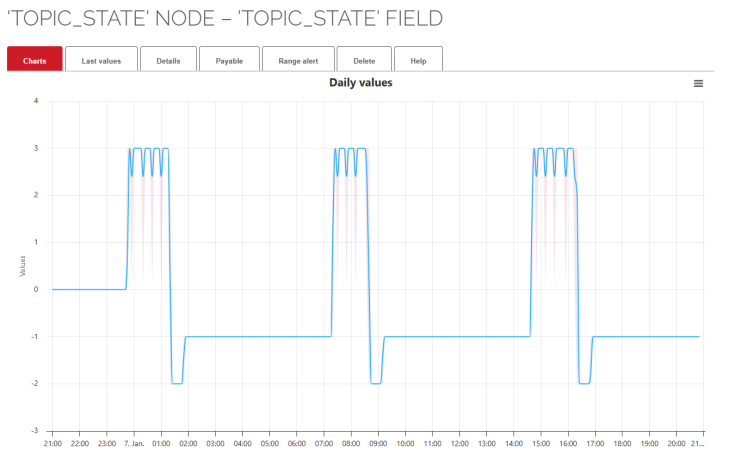
I now put the values to 50 minutes minimum heating time and maximum 360 minutes heating time. But still no complete success. Mitsu still defrosts too early.

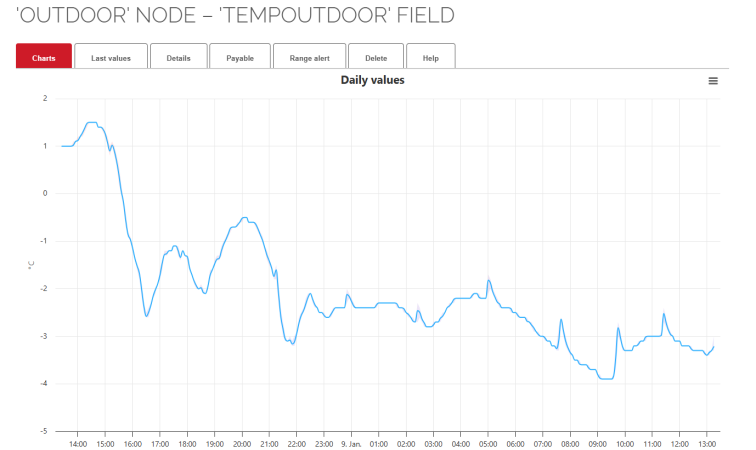
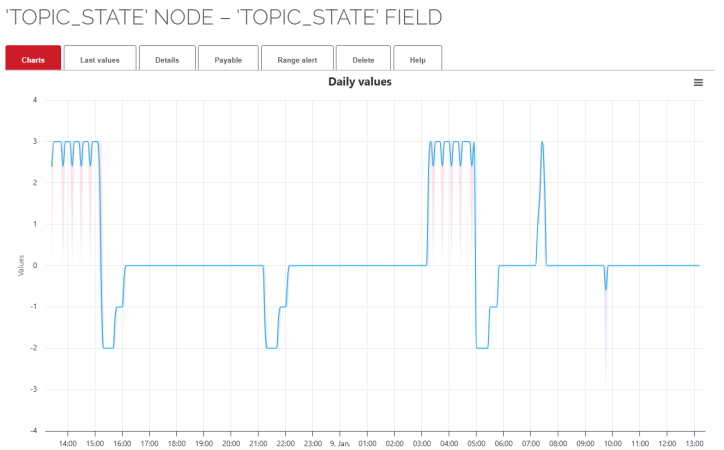
Could the small spikes (in red in the graph) be the reason for it?
 

Liitteet

  • Delta.png
    Delta.png
    92,6 KB · Katsottu: 23
  • Heatexchanger.png
    Heatexchanger.png
    100,9 KB · Katsottu: 20
  • Outdoor.png
    Outdoor.png
    63,9 KB · Katsottu: 16
  • State.png
    State.png
    67,8 KB · Katsottu: 21

puu

Aktiivinen jäsen
Relay works, I checked and switched it several times by the app, thanks. Didn't see that function immediately.
Does manual switching of the relay trigger defrosting?

It seems that Mitsurunner does not prevent defrosting. It defrosts even the state is idle (0) when relay should be on N.O. state. Are you sure that relay connections are OK?
 
Does manual switching of the relay trigger defrosting?

It seems that Mitsurunner does not prevent defrosting. It defrosts even the state is idle (0) when relay should be on N.O. state. Are you sure that relay connections are OK?
I just switched the relay and about two minutes later defrosting started.

I am quite sure that connections and relay are okay, hard to open up the AirCon in this weather.
What I will do now, to investigate a bit further: Switch off Mitsurunner and let the Mitsubishi do its own thing. And compare this evening, if defrosting happened way more often, than with Mitsurunner in "on" state.


Edit:
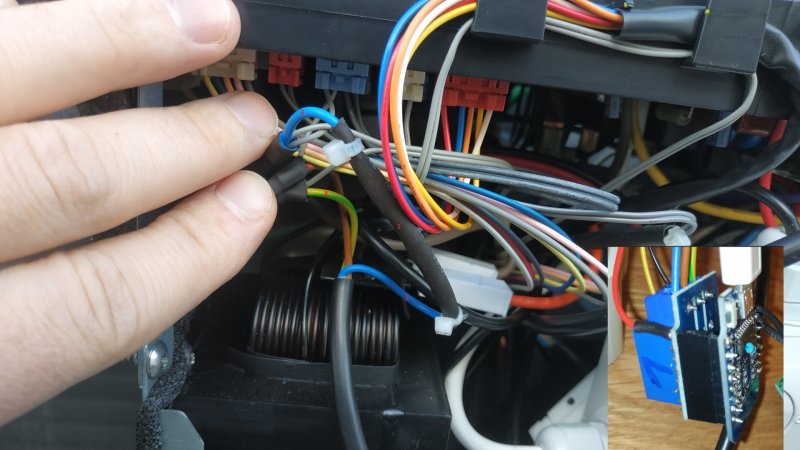
Just found some old pictures of the installation:
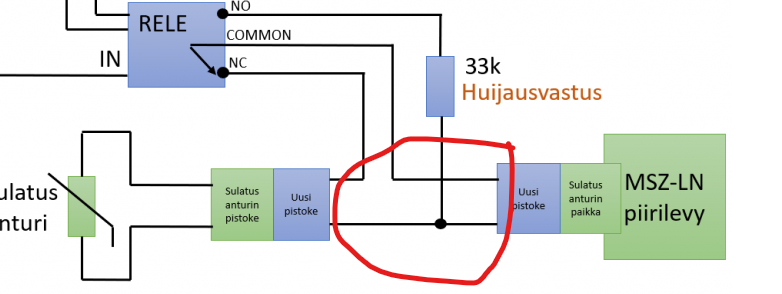
Cable Nr. 2: goes from relay NO (normally open) in blue color to the 33k Resistor (in the Picture Nr. 1)
From there it goes to the connector and to the normal plug at the PCB and to the defrost sensor (Nr. 4)
Number 5 is just the connection to the plug at the PCB to the defrost sensor ; gets connected by the relay between common and NC

Any issues or faulty connection you can see here?
 

Liitteet

  • Mitsu.jpg
    Mitsu.jpg
    265,2 KB · Katsottu: 29
Viimeksi muokattu:

puu

Aktiivinen jäsen
I just switched the relay and about two minutes later defrosting started.
It should start defrosting quite immediately when the relay is switched, but only it the pump wants to defrost (ie. Mitsurunner has expanded the heating cycle from normal).

To me your logs look like the pump works otherwise like it does normally without Mitsurunner, except there is one over three hour heating period there.
 

iro

Vakionaama
I just switched the relay and about two minutes later defrosting started.

I am quite sure that connections and relay are okay, hard to open up the AirCon in this weather.
What I will do now, to investigate a bit further: Switch off Mitsurunner and let the Mitsubishi do its own thing. And compare this evening, if defrosting happened way more often, than with Mitsurunner in "on" state.
From Mitsurunner WEB-page turn "Mitsurunner enabled" switch OFF, it disables defrosting control of Mitsurunner but temperature data is still sent to IoT-Guru.
See how Mitsubishi works when defrosting control is disabled.
 
It should start defrosting quite immediately when the relay is switched, but only it the pump wants to defrost (ie. Mitsurunner has expanded the heating cycle from normal).

To me your logs look like the pump works otherwise like it does normally without Mitsurunner, except there is one over three hour heating period there.
I just updated my last post with a picture and description. Maybe you could check the connection, if there is something cabled wrong?

I was quite sure for a long time, that Mitsurunner worked properly. Before installing Mitsurunner the unit defrosted every 45-60 minutes and couldn't even reach the desired temperature in the house. After installing it, was way better.

Edit:
What confuses me a bit is the connection in the picture, with the 33k resistor.
 

Liitteet

  • Connection.png
    Connection.png
    118 KB · Katsottu: 23
Viimeksi muokattu:

iro

Vakionaama
I just updated my last post with a picture and description. Maybe you could check the connection, if there is something cabled wrong?

I was quite sure for a long time, that Mitsurunner worked properly. Before installing Mitsurunner the unit defrosted every 45-60 minutes and couldn't even reach the desired temperature in the house. After installing it, was way better.
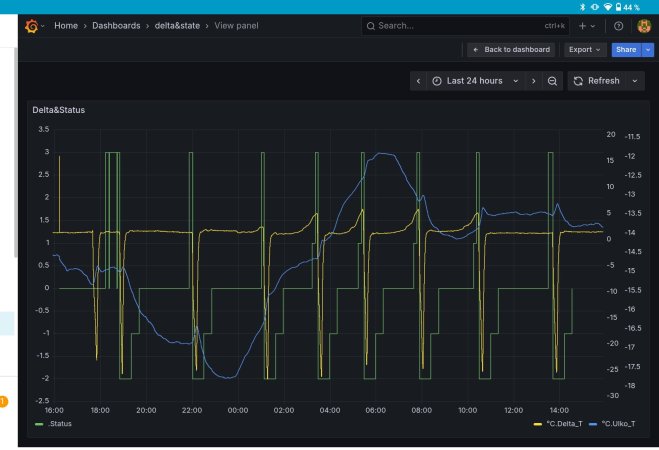
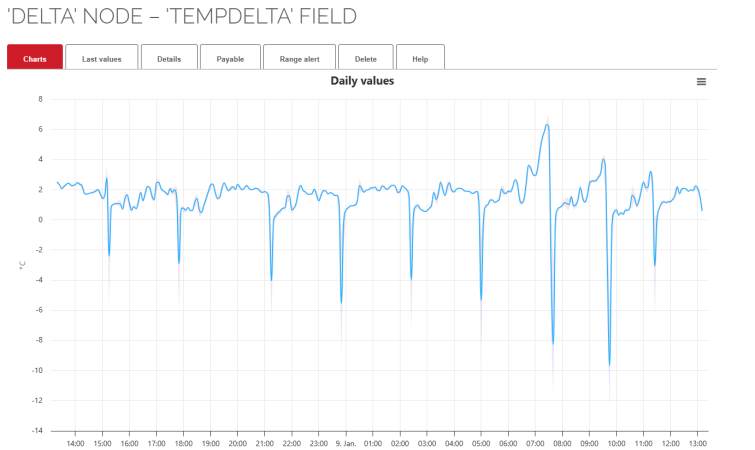
Based on the graphs, it looks like there is something wrong with your system. The graphs (deltaT and status) look something like this.
 

Liitteet

  • Screenshot_20260109-155433.jpg
    Screenshot_20260109-155433.jpg
    171,4 KB · Katsottu: 21

iro

Vakionaama
Weird. Could I try to switch the "Relay - defrost prevetion" to Off? In case that NC and NO are connected in the wrong order?


@iro
Any idea after checking the cables?
Disable defrosting control from Mitsurunner, then you can see from graphs how Mitsubishi goes without defrosting manipulation.
 
Back
Ylös Bottom