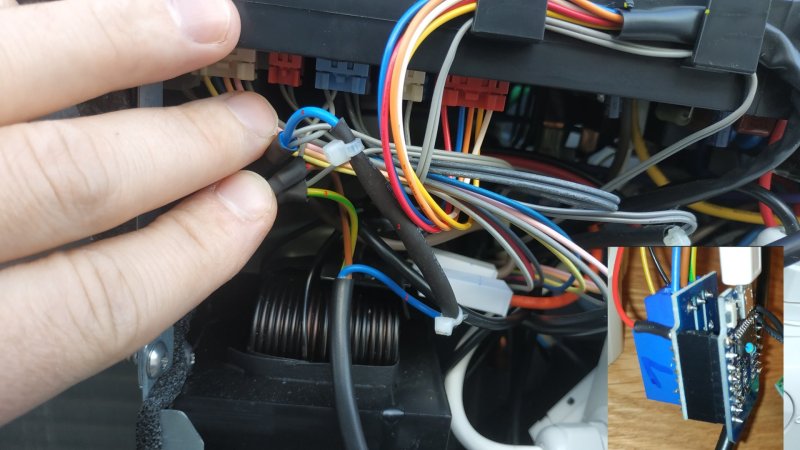
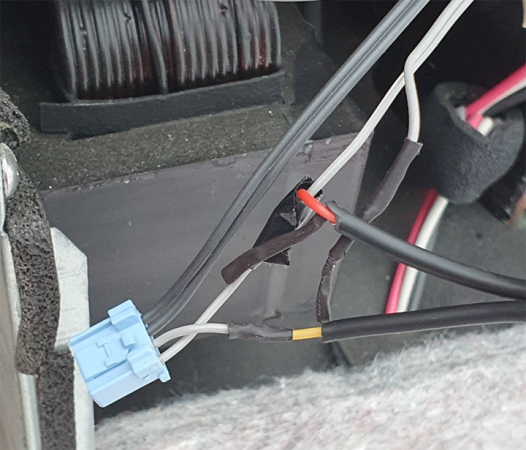
NC and NO are connected in the wrong order?
This is what is spinning around the only brain cell I have.

Seuraa alla olevaa videota nähdäksesi, miten asennat sivustomme verkkosovelluksena aloitusnäytöllesi.
Huom.: This feature may not be available in some browsers.
NC and NO are connected in the wrong order?
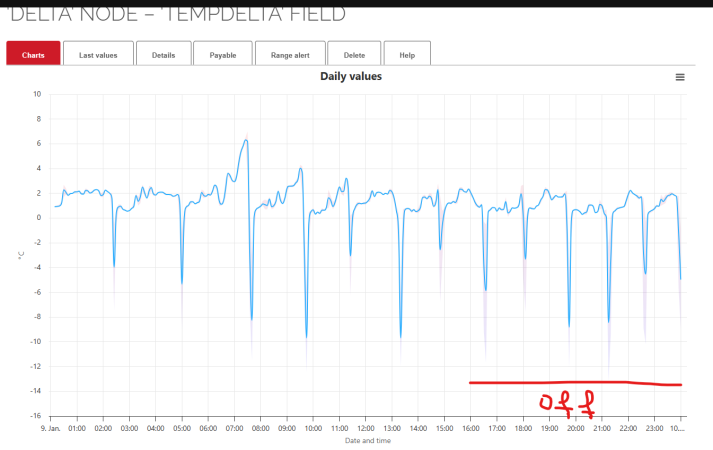
If NC and NO connected in the wrong order and Mitsurunner is disabled ==> defrost prevention is always activated and heating period is very long.I now switched off by web-interface Mitsurunner, to get comparable behaviour of the unit. But will take a few hours, to have some data.
But basically, what are possible failures?
- NC and NO connected in the wrong order
- 33k resistor doesn't work as intended / properly anymore
- Relay doesn't work properly (even if it makes clicking sound)
Anything else?
With Mitsurunner switched disabled and Max heating time 120 min?If NC and NO connected in the wrong order and Mitsurunner is disabled ==> defrost prevention is always activated and heating period is very long.
More analysis can be done when data with data Mitsurunner disabled ja data when MAX_HEATING_TIME is 120 is available.
Two cases:With Mitsurunner switched disabled and Max heating time 120 min?
I can do, no problem at all. But when Mitsurunner is switched off, does the max heating time have any influence at all?

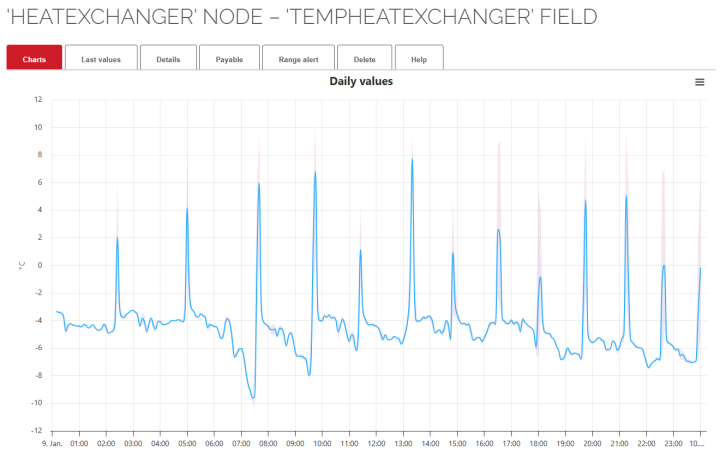
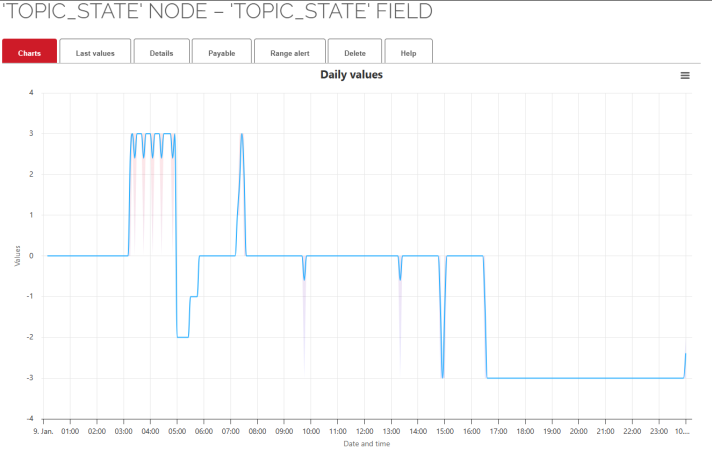
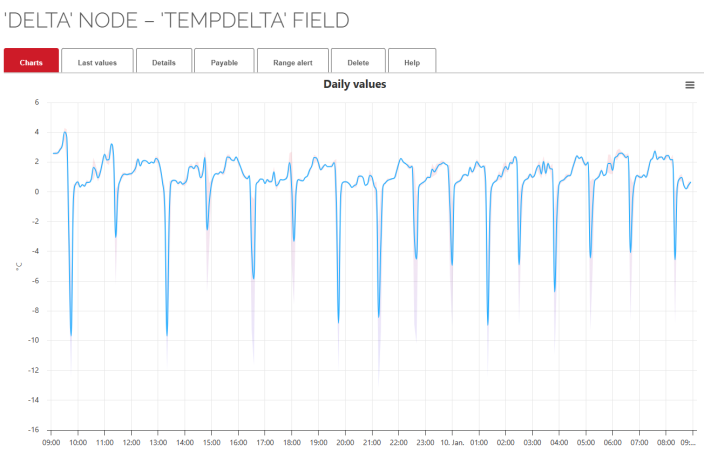
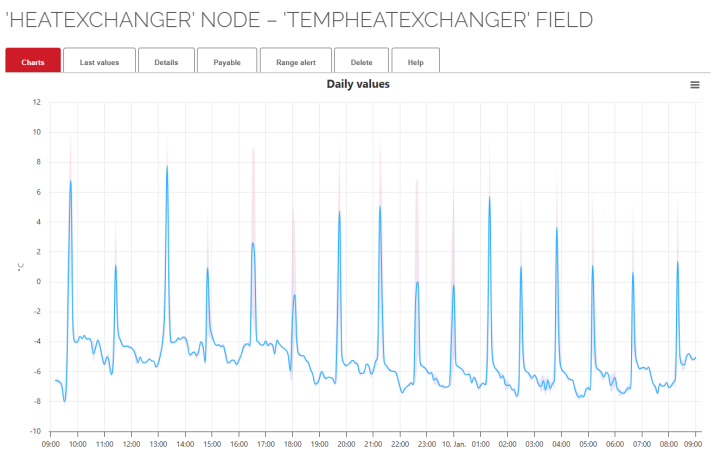
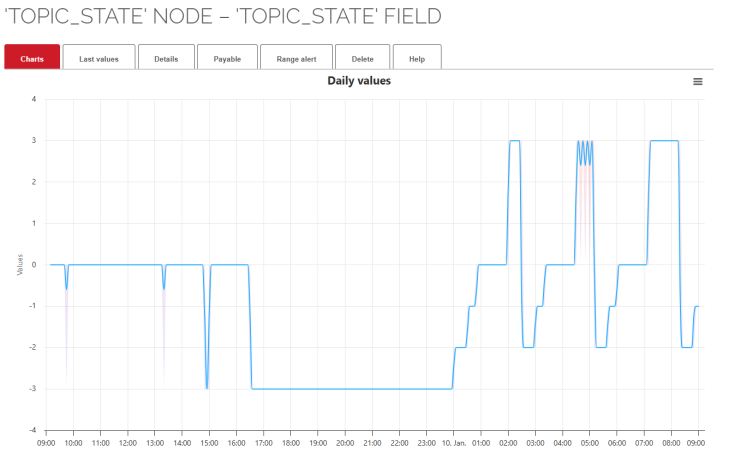
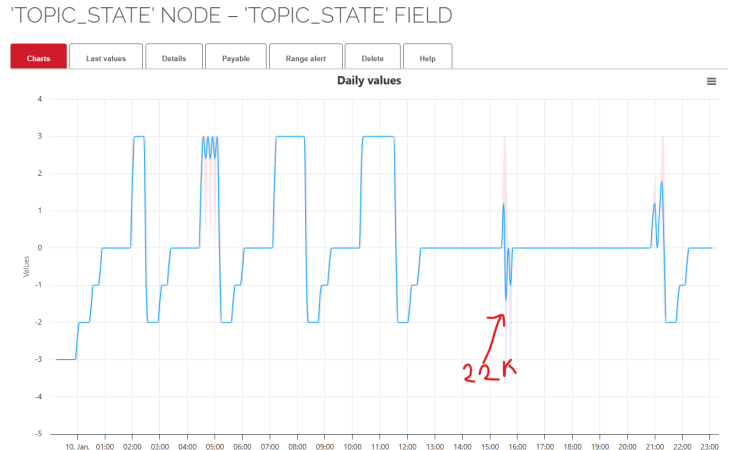
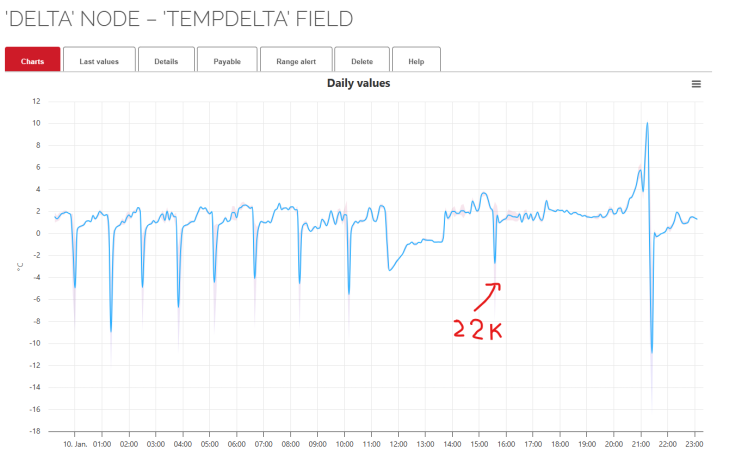
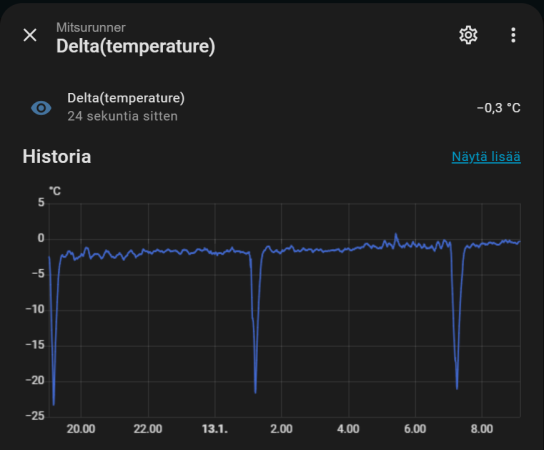
No it shouldn't go to -2 state, it should remain in 0 state. From Mitsurunners' point of view it is illegal situation if the state is 0 and defrosting is on, because the relay should prevent that. I'm pretty sure there is a harware problem.A queston to @puu , from @CheatTheMi,s curves: Mitsurunner status is 0 (has been 0 more than 60 minutes), Mitsubishi makes defrosting and deltaT goes to -3C. My understanding is that status should go to -2, , but in the curve it stays at zero. Is it OK ?
Here is the result of the past 8 hours with Mitsurunner switched off.Two cases:
a) Mitsurunner disabled
It seems that Mitsubishi always "sees" only its own NTC thermistor regardless of the relay position.Here is the result of the past 8 hours with Mitsurunner switched off.
The other one with 120 minutes I just programmed and will share it with your tomorrow.
Really looks like.It seems that Mitsubishi always "sees" only its own NTC thermistor regardless of the relay position.
The reason for this behavior could be that the relay's COMMON and NC are always connected, resistor is never connected.Really looks like.
Relay? Resistor?
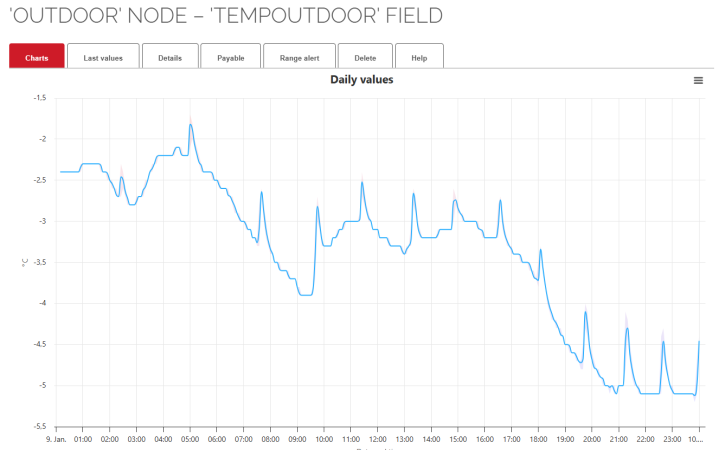
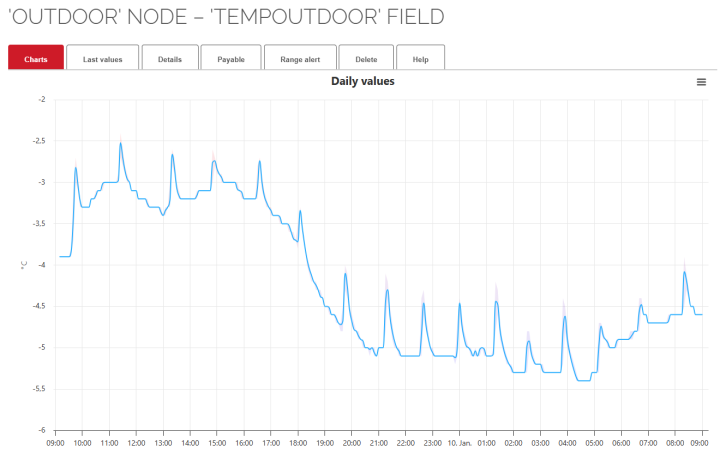
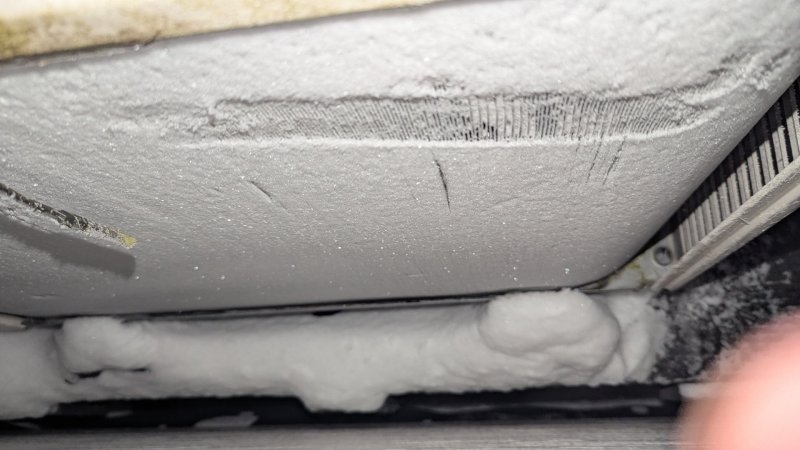
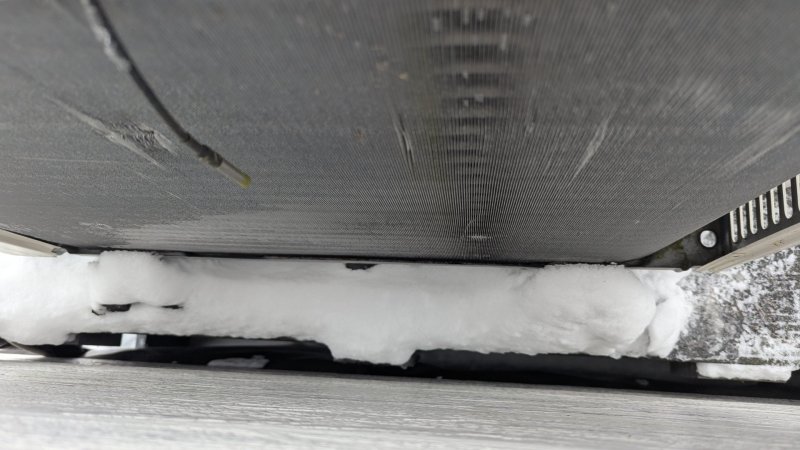
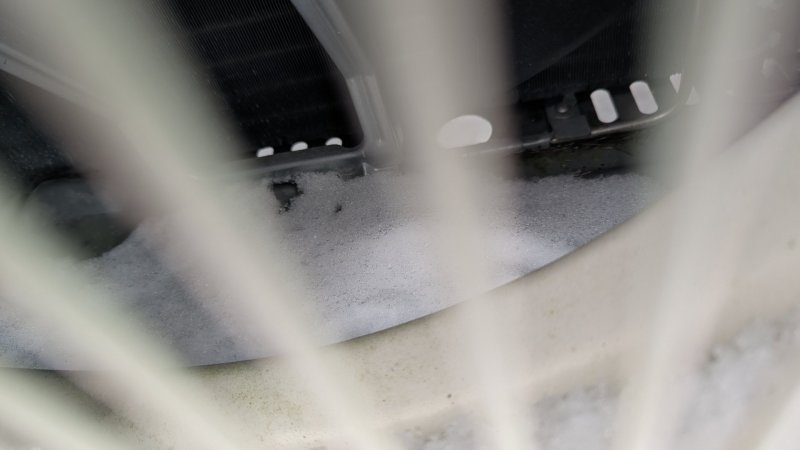
Conditions were "harsh" at night, snowy, stormy, but anyway it defrostet almost every hour.
Okay, I will open up Mitsu later and measure, if the relay is properly opening and closing its connector.The reason for this behavior could be that the relay's COMMON and NC are always connected, resistor is never connected.
What I checked now:Resistor should be 33k (not 66k).
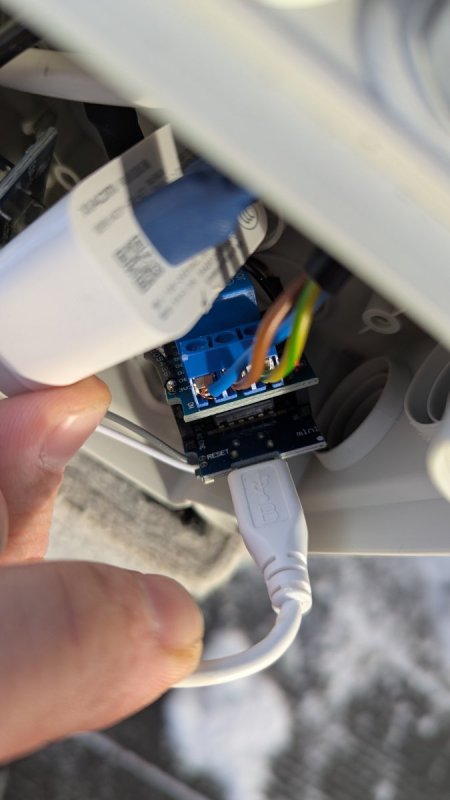
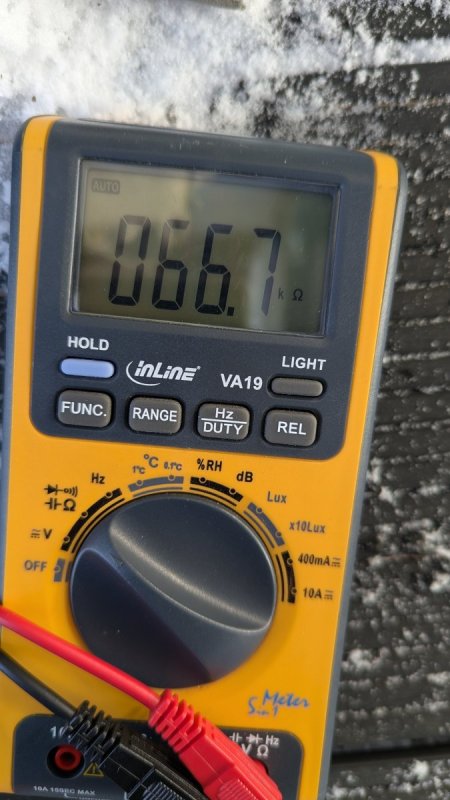
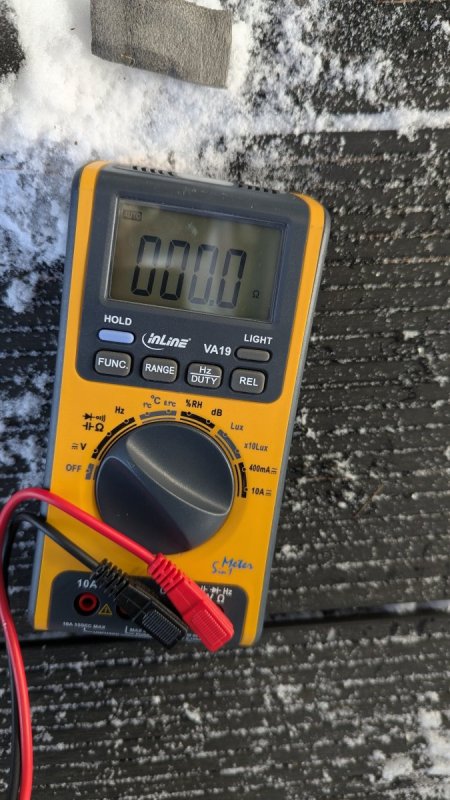
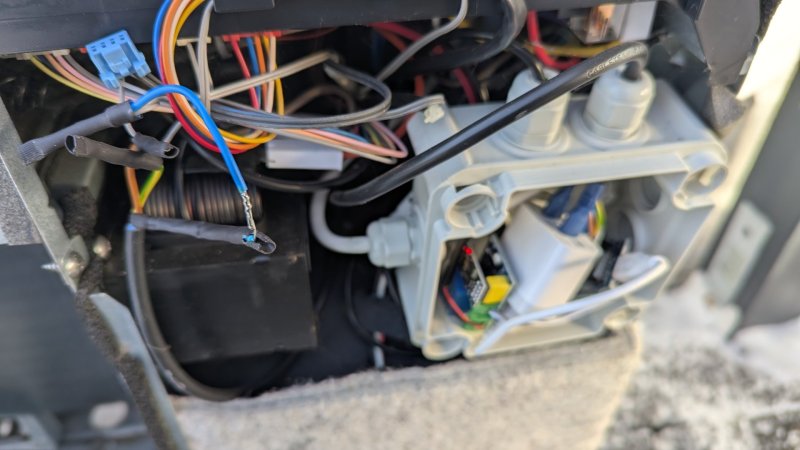
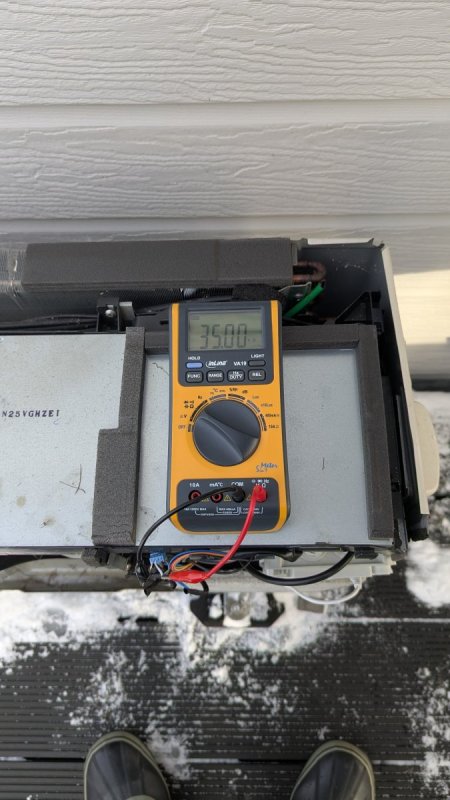
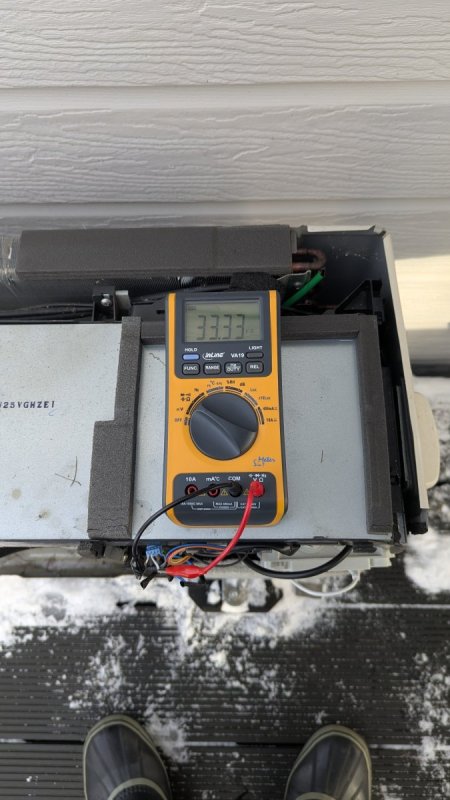
One possible reason could also be: everything is ok, butWhat I checked now:
- Measured between relay NO and end of the plug: 33K resistance, sorry mixed up the 66k somehow
- Measured the relay between Common and NO and Common and NC: Everything works as expected, after switching in the app Defrost mode, Relay also clicks
- Measured between Common and NO in "Defrost prevention on": 66k ; Defrost prevention off: 0
- Measured between Common and NC in "Defrost prevention on": 0k ; Defrost prevention off: 66k
So, I guess there is something cabled wrong, otherweise I wouldn't have constantly 66k Ohm. Could you please check again?
@wannabe:
Yeah, that is the other option. But would prefer to fix it today, next nights will be cold.
Edit: Other measurement:
Two pins for measuring in the blue plug:
- Defrost prevention on: 33k
- Defrost prevention off: 34.5k
At the moment we have -2.5°C
That's actually a good guess.One possible reason could also be: everything is ok, but
I forgot that there is only a couple of degrees below zero there. At that temperature, the NTC resistor’s value is close to 33 kΩ, so it’s possible that the relay does switch between 33 kΩ and the NTC resistor, but since the resistance value seen by the outdoor unit hardly changes, the defrost cycle is not triggered. If so ressistor value should be 27k ?
I'm not sure how carefully operation is verified under those circumstances.
I think 22k is Ok for testing.That's actually a good guess.
Because after the final measurements at the plug -in my thoughts- everything is connected correctly:
- Defrost prevention on: 33k - value as it should be
- Defrost prevention off: 34.5k - value that makes sense at this temperature
I would try your idea about the 27k, but I don't have them at home.
22k, 10k
I think 22k is Ok for testi
Cross your fingers... Looks good for the moment.I now installed the 22k, set back max. heating time to 360 minutes and will post results, when I have new data available. About tomorrow...
What I checked now:
- Measured between relay NO and end of the plug: 33K resistance, sorry mixed up the 66k somehow
- Measured the relay between Common and NO and Common and NC: Everything works as expected, after switching in the app Defrost mode, Relay also clicks
- Measured between Common and NO in "Defrost prevention on": 66k ; Defrost prevention off: 0
- Measured between Common and NC in "Defrost prevention on": 0k ; Defrost prevention off: 66k
So, I guess there is something cabled wrong, otherweise I wouldn't have constantly 66k Ohm. Could you please check again?
Are you now running with 22k resistor and how does LN work with it?Cross your fingers... Looks good for the moment.
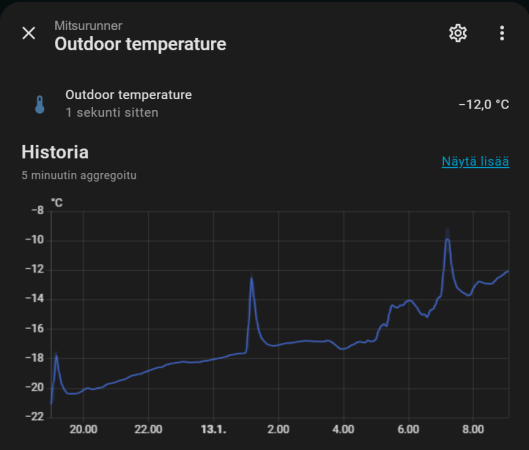
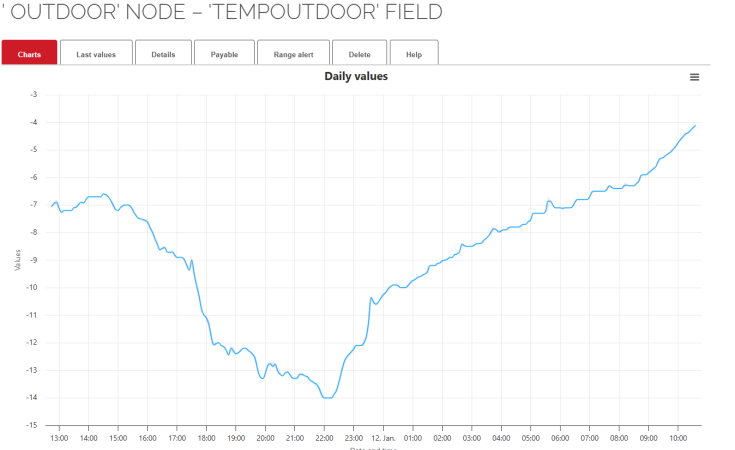
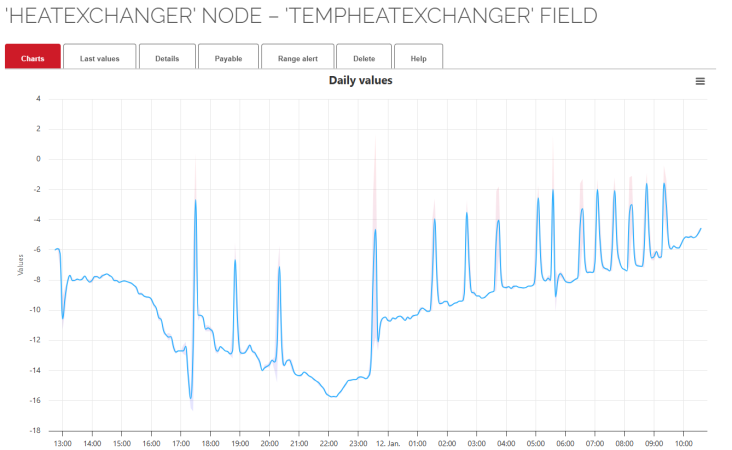
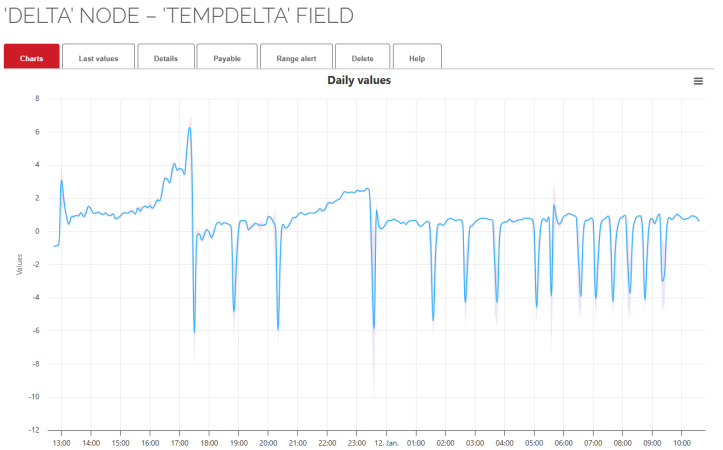
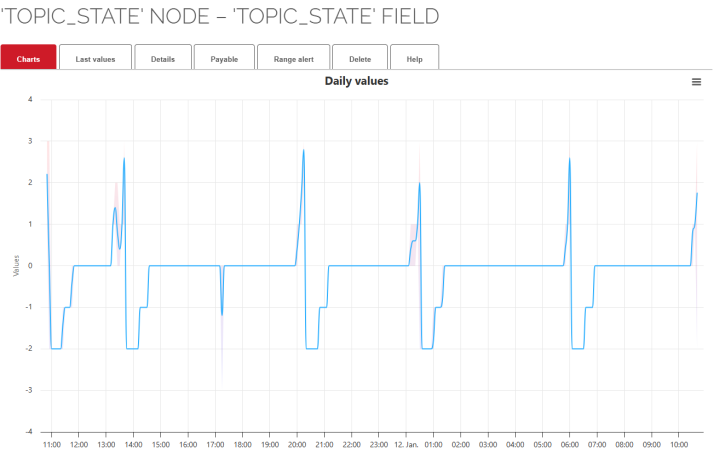
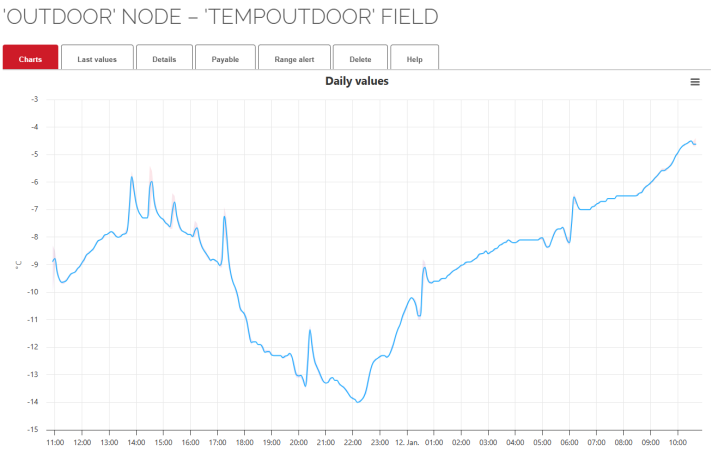
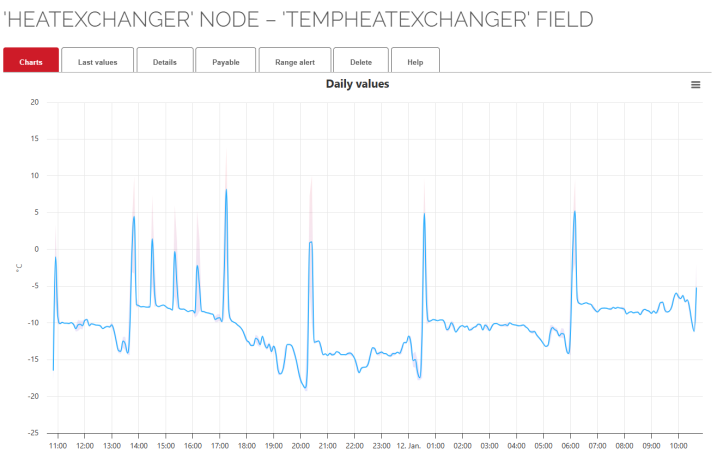
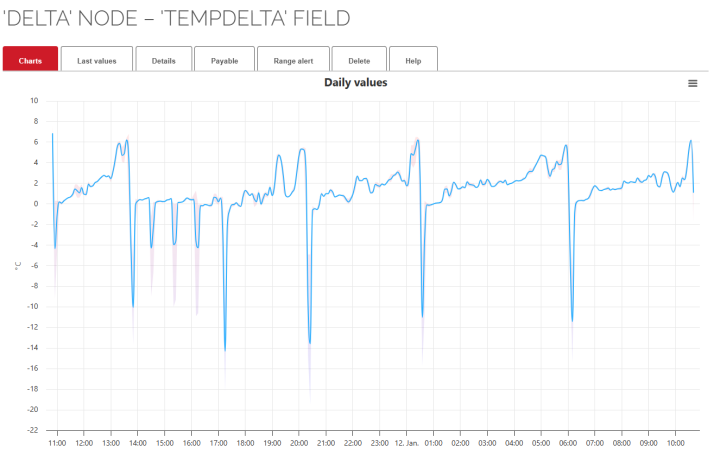
Six hours constant heating in temperatures between -2°C up to -12°C. Let's see, what the night says...
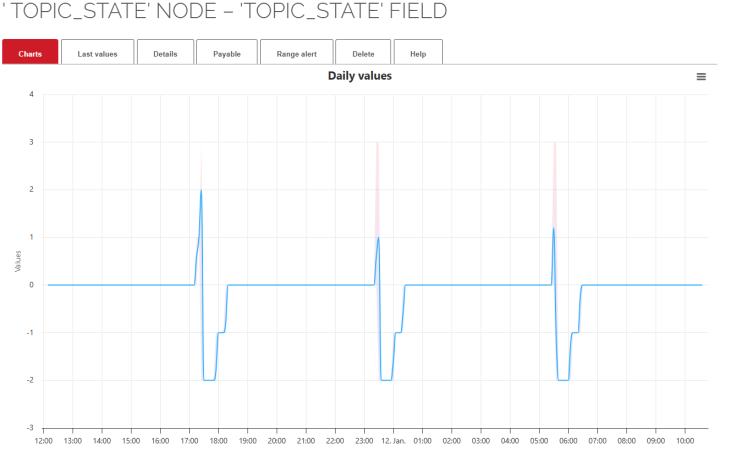
If I remember correctly, during the development phase of Mitsurunner there was discussion about whether the cheating resistor affects the operation of the base plate heating element. Since there was no certainty about this, that cheaing wiring arrangement was chosen and 33 kΩ was selected because it corresponds to approximately 0 °C. (Another wiring would be just connect some 56k parallel to NTC).@puu
Okay, thanks, then my measurement was correct. Makes sense with your painting, how it added together.
@iro
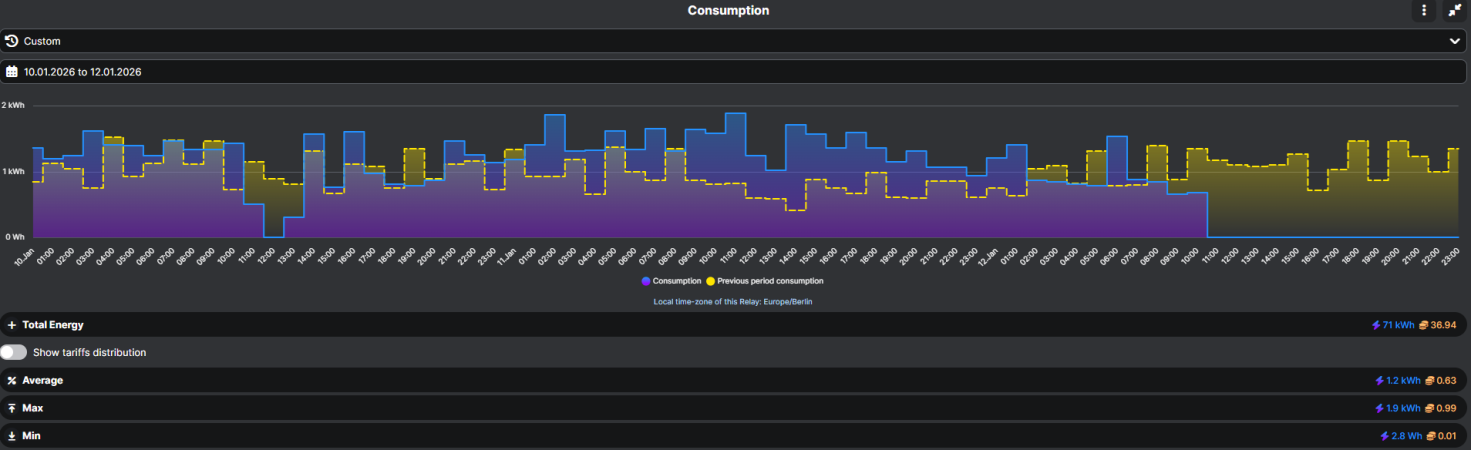
You are my hero. The last 48 hours were perfect for testing. Temperatures from -2.5°C down to -16°C, super humid air (was foggy af), super dry air. And Cheating the Mi worked super fine with the 22k resistor.
I made some interesting observations:
I have two units in use. One for the spacious living room and one for the sleeping loft, which is just about 12sqm. Normally just the unit in the living room is running. But I wanted to reduce noise and load on the unit in the living room, so I started yesterday the second unit as well (after fixing its Mitsurunner with the 22k resistor as well ; and a cable from the thermal-sensors was broken, so it got no values).
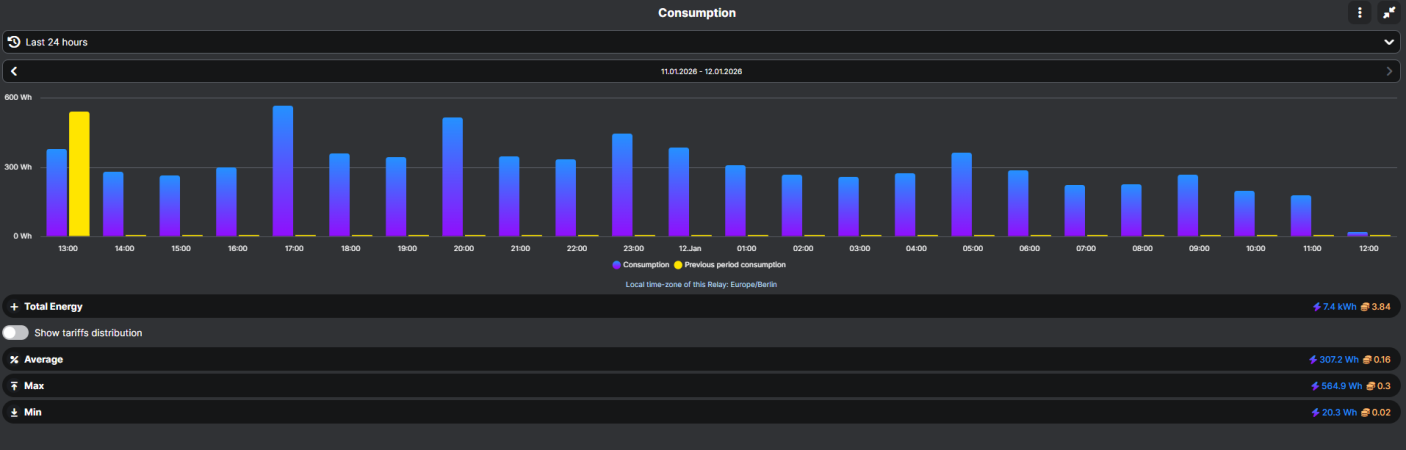
The unit in the living room was running in average at 1.2kW, including the defrosting cycles. This unit was defosting either when the temperature-delta was long enough above 5°C OR after the 360 minutes MAX_HEATING_TIME. The outdoor unit was frozen quite hardly, but it defrosted completely and didn't have any issues at all. But you could clearly hear and see the defrosting progess.
Now comes the interesting part:
The unit in the sleeping loft was almost just idling at about 300W all the time. It built ice up as well on the outside unit, but never hit the temperature Delta of 5°C. But anyhow it defrosted itself very slightly, without the outdoor unit running at full RPM of the compressor. You just heard at the unit inside the typical gas-expansion sound, where it "defrosted" the outdoor unit just by changing the heat-cooling cycle for a few minutes and it was enough to defrost the outdoor unit. But I yet have no proper interpretation of the STATE_SECOND_UNIT, if and how Mitsurunner intervented in this case and if it did anything at all.
Really looks like. After changing the 33k to a 27k, Mitsurunner immediately started working as intended.Interesting if the smaller resistor really helps here. If your DMM is well calibrated, your resistor's 33,33kOhm is just 1% above the stated resistance. Temperature affects maybe 50 ohms in a case of a metal film resistor. I guess your (presumed) metal film resistor has 1% precision, so maybe it is just a bad luck that your resistor is just in the upper limit of its tolerance. And of course the internal measurement circuit of the heat pump has its own tolerances.
33k resistor was originally chosen because it corresponds about +1...2°C temperature. 27k would be around +5°C. If the 27k resistor seems to work flawlessly, maybe I should consider to put 27k resistor in the adapters in the future. It would give some more headroom. So far this would the first verified case where 33k would be too high.
Good point! I didn't remember that base plate heating element. At least I know that some people has been using a 30k resistor without issues. Maybe to put something like 31,6k with 1% tolerance so resistance would be between 31,3k and 31,9k. It would give a little more headroom to never "be" under 0°C.If I remember correctly, during the development phase of Mitsurunner there was discussion about whether the cheating resistor affects the operation of the base plate heating element. Since there was no certainty about this, that cheaing wiring arrangement was chosen and 33 kΩ was selected because it corresponds to approximately 0 °C. (Another wiring would be just connect some 56k parallel to NTC).
NOTE ! If/when you reduce the value of the cheating resistor, make sure to check that the base plate heating works during the defrost cycle.
Just 30k or 31.6k are hard to find over here, but they do exist.Good point! I didn't remember that base plate heating element. At least I know that some people has been using a 30k resistor without issues. Maybe to put something like 31,6k with 1% tolerance so resistance would be between 31,3k and 31,9k. It would give a little more headroom to never "be" under 0°C.
33k should never be a problem if 1% tolerance, but with 5% tolerance it can be up to 34,65k that could in some case represent temperature slightly below zero.
Let's not do too much fine-tuning. Instead of adding complexity, perhaps it could be simplified.Just 30k or 31.6k are hard to find over here, but they do exist.

 Tosi vakaa siis, möllöttää ulkoyksikön päällä rasiassa, jonka kanteen on liimattu 10 mm Armaflex-matto (joka ei kyllä siellä -30:ssä kirjaimellisesti paljoa lämmitä).
Hyvin on vetänyt. Noin yleiseti ottaen pakkanen ei ole ongelma elektroniikalle joka on toiminnassa jatkuvasti sillä pienikin jatkuva teho estää kosteuden tiivistymistä.Ihan vaan irtohuomiona, että täällä ollut pari viikkoa -20 kylmempää ja reilun viikon verran -30 tai kylmempää ja Sonoff Elite ei ole tiennyt mitään. Elokuussa flässäsin sen MQTT-keissin takia uusiksi ja siitä asti painattanut samalla uptimellä tähän asti
Nyt flässäsin uuden, johon laitoin Home Assistant APIn päälle ja sehän löytyi sieltä kivasti heti käynnistyttyään. Kummallisen kauan meni kyllä compilata, abaut vartin ruksutti. Fläshi meni sekunnissa perille, kuten tavallista. Pidensin samalla säälisulatusta kuuteen tuntiin. Jos Mitsu leipoo, niin hyvä syy laittaa isompi Daikini tilalle.
"Ne vehkeet ajetaan loppuun."
 ) mutta hyvä kuulla, että toiminta on "tavanomaista" eikä tarvitse huolestua.
My Mitsurunner version has a clamp current meter and it adjusts the delta as a function of input power of the heat pump. My delta is initially 1°C and every 1000W above 300W increases delta by 1°C. So for example at 800W delta is 1,5°C. Note that my sensor is in different place than in the instructions.The unit in the sleeping loft was almost just idling at about 300W all the time. It built ice up as well on the outside unit, but never hit the temperature Delta of 5°C.

On sitä ilmeisesti saatu vähemmän huonoksi, mutta on mm. tuolla ketjussa LN2:kin suhteen taipumusta hullunkiertoon:Onko tätä sulatuslogiikkaa muutettu uusiin msz-ln pumppuihin? VTT:n testit näyttävät kuitenkin ihan hyviä arvoja. Sori kun en jaksanut lukea 56 sivua jos tähän on jo vastattu
On sitä ilmeisesti saatu vähemmän huonoksi, mutta on mm. tuolla ketjussa LN2:kin suhteen taipumusta hullunkiertoon:
MSZ-LN2
Lämpötila asetus saa aikaan kulutuspiikin, vaikka aktiivinen ja uusi arvo olisivat samat.lampopumput.info
"Laitteen lämpötilan asetusarvo +20 °C"Onko tätä sulatuslogiikkaa muutettu uusiin msz-ln pumppuihin? VTT:n testit näyttävät kuitenkin ihan hyviä arvoja. Sori kun en jaksanut lukea 56 sivua jos tähän on jo vastattu
@CheatTheMi , I have no idea whether this would help at all, but with software it would be very easy to create a DeltaT value that adjusts according to the outdoor temperature.My Mitsurunner version has a clamp current meter and it adjusts the delta as a function of input power of the heat pump. My delta is initially 1°C and every 1000W above 300W increases delta by 1°C. So for example at 800W delta is 1,5°C. Note that my sensor is in different place than in the instructions.